


In This Article
Association football is governed by a standardized set of laws that define how the game is played, officiated, and judged at every level. Association Football Rules Explained: A Complete Guide to Laws, Fouls, and Restarts provides a clear, authoritative overview of those laws, helping readers understand not only what the rules are, but why they exist and how they are applied in practice. Whether you are a player, coach, referee, or informed spectator, a solid grasp of the laws improves understanding, fairness, and enjoyment of the game.
What Is Association Football?
Association football, commonly known as football or soccer, is a team sport played between two sides of eleven players. The objective is to score by moving the ball into the opposing team’s goal using any legal part of the body except the hands and arms, with limited exceptions for goalkeepers. The sport is governed globally by a unified rulebook to ensure consistency across competitions, regions, and levels of play.
The laws are written and maintained by the International Football Association Board, and adopted worldwide through FIFA. This shared framework allows the game to be played the same way in local matches and international tournaments alike.
Core Concepts of the Laws of the Game
The Laws of the Game are built around several foundational principles. Fair play is central, requiring respect for opponents, officials, and the spirit of competition. Safety is another priority, with rules designed to reduce unnecessary risk and dangerous conduct. Consistency ensures that similar actions are judged the same way, regardless of context.
Importantly, the laws allow referees a degree of discretion. Officials are instructed to apply the rules in a manner that preserves flow and fairness, intervening firmly when safety or equity is compromised.
Structure of the Laws of the Game
The official laws are divided into 17 sections, each covering a specific aspect of play. These include the field of play, the ball, the players, match officials, duration, and the methods of restarting the game. While all laws are equally authoritative, some such as fouls, misconduct, and restarts have a greater day-to-day impact on how matches unfold.
Understanding this structure helps readers locate specific rules and see how individual decisions fit into the broader framework.
Match Duration and Player Roles
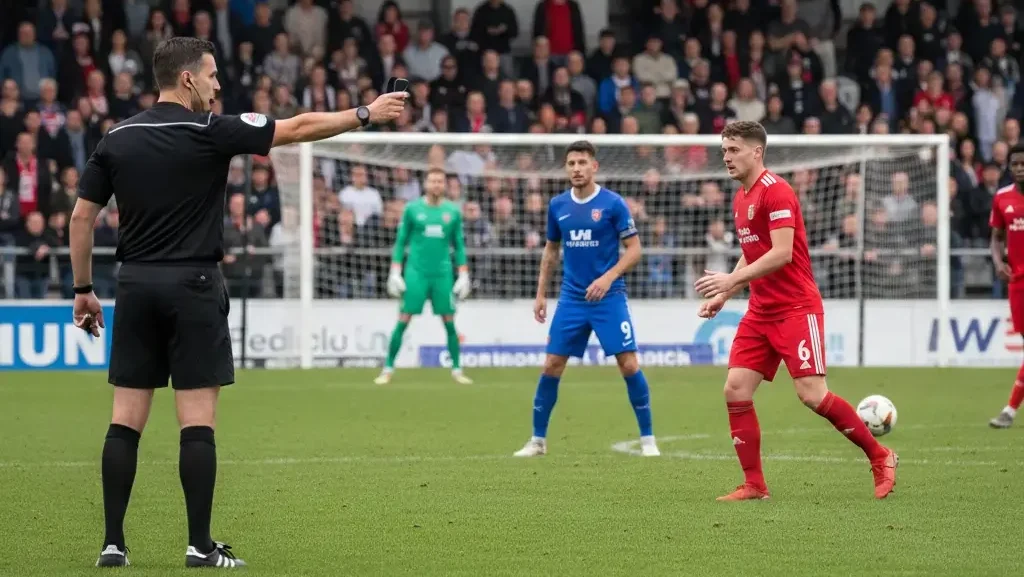
A standard match consists of two equal halves, separated by a halftime interval. The referee may add time at the end of each half to compensate for stoppages such as injuries, substitutions, or disciplinary actions. The match begins and restarts with a kickoff, and ends when the referee signals full time.
Each team fields one goalkeeper and ten outfield players. The goalkeeper has special privileges within their own penalty area, including the ability to handle the ball. Outside that area, the goalkeeper is subject to the same restrictions as any other player.
Fouls and Misconduct Explained
Fouls occur when a player commits an offense against an opponent in a careless, reckless, or excessively forceful manner. Common fouls include tripping, pushing, holding, and charging improperly. Handling the ball deliberately by a non-goalkeeper is also a foul.
Misconduct refers to behavior that violates the spirit or safety of the game, even if it does not involve direct contact. This includes dissent, unsporting behavior, and serious foul play. Referees use disciplinary sanctions to manage misconduct and maintain control.
Yellow and Red Cards
A yellow card is issued as a caution, warning a player that their behavior is unacceptable. Accumulating two yellow cards in the same match results in a red card. A red card may also be shown directly for serious offenses such as violent conduct or denying an obvious goal-scoring opportunity by foul play.
A player who receives a red card is sent off and may not be replaced, leaving their team with fewer players for the remainder of the match.
Restarts of Play
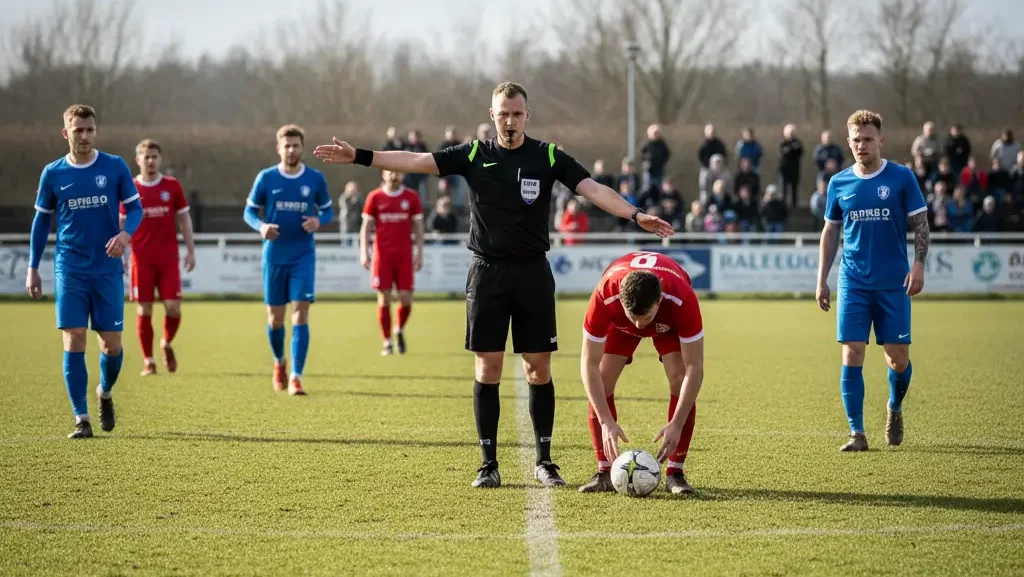
Restarts are formal methods of resuming play after a stoppage. Each restart has specific conditions governing how and when it may be taken.
Free Kicks
Free kicks are awarded after fouls or infringements. They are either direct, allowing a goal to be scored directly, or indirect, requiring another player to touch the ball before a goal can be scored. The defending team must respect the required distance until the ball is in play.
Penalty Kicks
A penalty kick is awarded when a defending player commits a foul inside their own penalty area. The kick is taken from the penalty mark, with only the goalkeeper permitted to defend. Penalties are designed to restore a clear scoring opportunity unfairly denied.
Throw-Ins, Corner Kicks, and Goal Kicks
When the ball leaves the field of play, the method of restart depends on who last touched it and where it crossed the boundary. Throw-ins restart play from the touchline, while corner kicks and goal kicks restart play from the goal line. Each restart has precise technical requirements that must be followed.
Offside Rule Explained
The offside law is one of the most discussed aspects of football. A player is in an offside position if they are nearer to the opponent’s goal line than both the ball and the second-last opponent at the moment the ball is played to them, excluding certain situations.
Being in an offside position is not an offense by itself. An offense occurs only if the player becomes involved in active play, such as interfering with an opponent or gaining an advantage. The rule aims to prevent unfair goal-hanging and encourage balanced play.
Historical Context of Football Rules
Modern football rules emerged in the nineteenth century as different regional versions of the game sought standardization. Early disagreements over handling, tackling, and scoring methods led to the creation of a unified code.
The establishment of a single law-making authority brought clarity and global consistency. Over time, the laws have evolved to address changes in playing style, athlete safety, and technology, while preserving the game’s core identity.
Common Misunderstandings and Best Practices
Many disputes arise from misunderstandings rather than incorrect application of the laws. For example, not all handball incidents are offenses; intent and arm position are key considerations. Similarly, physical contact is not automatically a foul unless it meets the defined criteria.
Best practice for players and coaches is to learn the principles behind the laws, not just isolated rules. Understanding why decisions are made promotes discipline and reduces unnecessary conflict with officials.
Conclusion
The laws of association football provide a structured, fair, and universally recognized framework for the world’s most widely played sport. From defining fouls and misconduct to regulating restarts and offside decisions, the rules balance safety, fairness, and continuity of play.
A clear understanding of these laws benefits everyone involved. Players make better decisions, officials manage matches more effectively, and spectators gain a deeper appreciation of the game’s nuances. Mastery of the rules ultimately supports the integrity and enjoyment of football at every level.