


In This Article
The operational logic behind Smart Home Automation Systems
Smart Home Automation Systems function as distributed control layers built on networked hardware, embedded computation, and rule-based execution. Each device inside this ecosystem operates less like an isolated appliance and more like a node in a coordinated digital environment. The intelligence is not centralized in a single machine; it is distributed across sensors, firmware, and cloud services that continuously exchange state information.
Smart Home Automation Systems do not wait for explicit manual commands in every scenario. They interpret conditions. They react to triggers. They execute predefined logic chains that remove repetitive decision-making from daily household operations.
A lighting system turning on when a room becomes occupied is not a convenience feature alone. It is a condition-response loop executed in milliseconds.
Device networking inside Smart Home Automation Systems
At the core of Smart Home Automation Systems lies connectivity architecture built on Wi-Fi, Bluetooth, and lightweight IoT protocols. The same networking standards also power modern wireless audio systems, enabling synchronized playback and multi-device communication throughout connected environments.
These communication layers allow devices to broadcast signals, receive instructions, and synchronize states across a shared network.
A thermostat does not operate in isolation. It exchanges temperature readings with a central controller. A camera does not simply record. It streams compressed data packets to a secure endpoint for interpretation and alert generation.
Smart Home Automation Systems depend on this continuous packet flow. Without it, automation collapses into manual switching behavior.
Signal loss breaks logic continuity.
Sensor intelligence in Smart Home Automation Systems
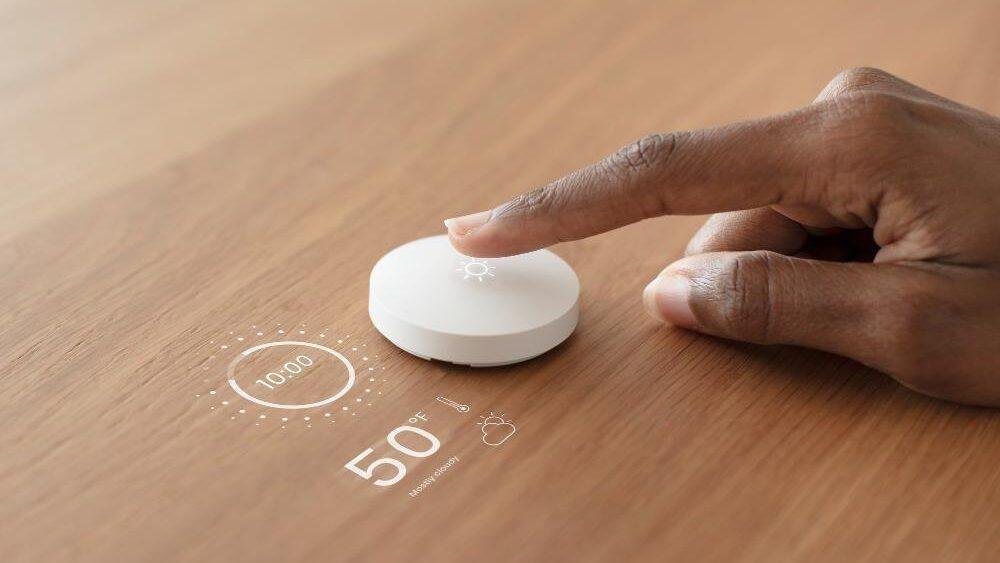
Sensors define how Smart Home Automation Systems interpret physical environments. Motion detection, humidity tracking, acoustic sampling, and luminosity measurement all contribute raw data inputs into embedded microcontrollers.
That data is not meaningful on its own. It becomes actionable only after processing.
A motion sensor inside Smart Home Automation Systems does not merely detect movement. It evaluates amplitude changes over time, filters noise, and determines whether an event threshold has been crossed. Once that threshold is met, a response sequence activates instantly.
A room becomes occupied. Lights respond.
No manual intervention required.
Rule execution and behavioral automation
Smart Home Automation Systems rely heavily on rule-based logic structures. These rules are typically defined through mobile applications or cloud dashboards, where users specify conditions tied to outcomes.
A simple rule may link sunset timing with lighting activation. A more complex rule may combine occupancy detection with temperature adjustment and security arming states.
These systems do not interpret intent. They execute logic precisely as configured.
Smart Home Automation Systems reduce behavioral repetition by externalizing decision-making into programmable conditions. Once a rule is active, execution becomes deterministic.
Remote orchestration through Smart Home Automation Systems
Control no longer depends on physical presence. Smart Home Automation Systems extend operational reach beyond the home perimeter through encrypted cloud gateways.
A user adjusting air conditioning from a different city interacts with the same control layer that exists locally inside the home network. The request travels through authentication layers before reaching the device endpoint.
Smart Home Automation Systems maintain state consistency between remote commands and local execution. This synchronization ensures that a door lock state or camera feed remains aligned across all access points.
Distance does not break control logic.
Latency is minimized through edge caching and lightweight command routing.
Voice interaction layers in Smart Home Automation Systems
Voice interfaces act as abstraction layers over Smart Home Automation Systems. Instead of navigating application menus, users issue natural language commands that are converted into structured device instructions.
A voice assistant interprets intent, maps it to registered device actions, and triggers execution pathways across connected hardware.
Smart Home Automation Systems use this layer to reduce interface friction. Physical interaction becomes optional. Command input becomes conversational.
A spoken instruction replaces multiple manual steps.
Energy optimization behavior in Smart Home Automation Systems
Energy efficiency emerges as a byproduct of energy-efficient smart home technologies that regulate consumption based on environmental feedback.
Lighting systems operate on absence detection. Devices shut down when no motion is registered within a defined time window.
Smart Home Automation Systems do not simply reduce consumption; they regulate it based on environmental feedback loops.
Power usage stabilizes through continuous adjustment rather than static scheduling.
Security execution within Smart Home Automation Systems
Security modules in Smart Home Automation Systems operate through real-time monitoring pipelines. Cameras, motion detectors, and smart locks feed constant telemetry into alert engines.
An unauthorized movement triggers an immediate notification chain. In some configurations, locks engage automatically while cameras switch to high-resolution capture modes.
Smart Home Automation Systems treat security as an event-driven system rather than a passive surveillance layer.
Threat detection activates response logic without delay.
Appliance-level automation inside Smart Home Automation Systems
Household appliances integrated into Smart Home Automation Systems operate with embedded scheduling and feedback intelligence.
A washing machine reports cycle completion states. A refrigerator tracks internal temperature deviations. A cooking device adjusts heat levels based on time-based recipes or sensor input.
Smart Home Automation Systems reduce continuous supervision by shifting responsibility to embedded automation routines.
Tasks complete without supervision loops.
Data flow and exposure risks in Smart Home Automation Systems
Every operational action inside Smart Home Automation Systems generates data. This includes usage logs, environmental readings, and behavioral patterns.
That data travels through encrypted channels, yet exposure risks persist at configuration and endpoint levels.
Weak authentication settings compromise entire Smart Home Automation Systems ecosystems faster than network-level breaches. Security depends on both infrastructure design and user configuration discipline.
System integrity fails when credentials weaken.
Operational constraints of Smart Home Automation Systems
Smart Home Automation Systems depend on network availability and hardware compatibility. When connectivity drops, automation logic halts or degrades into local fallback modes.
Device fragmentation introduces another constraint. Not all appliances communicate using the same protocol layers, which limits interoperability.
Smart Home Automation Systems function best when ecosystem consistency is maintained across devices, firmware versions, and network stability.
Fragmentation introduces execution gaps. Component Function in Smart Home Automation Systems Technical Impact Real-World Outcome Sensor Layer Captures environmental signals Converts physical data into digital triggers Automated responses without manual input Network Layer Connects devices via protocols Maintains real-time communication flow Synchronized device behavior Control Layer Executes automation rules Processes conditional logic Predictable system actions Security Layer Monitors threats and anomalies Detects unauthorized access patterns Rapid alert and response execution
What are Smart Home Automation Systems used for?
Smart Home Automation Systems are used to automate household control tasks. They manage lighting, climate, security, and appliances through programmed logic and sensor inputs.
Do Smart Home Automation Systems require internet?
Yes. Most Smart Home Automation Systems rely on internet connectivity for remote control, cloud processing, and synchronization between devices.
Can Smart Home Automation Systems work without Wi-Fi?
Partially. Some Smart Home Automation Systems support local control via Bluetooth or hub-based networks, but full functionality is limited offline.
Are Smart Home Automation Systems secure?
Not fully by default. Security depends on encryption, firmware updates, and user authentication strength within Smart Home Automation Systems.
Can Smart Home Automation Systems reduce electricity usage?
Yes. Smart Home Automation Systems optimize energy consumption by adjusting lighting and climate systems based on occupancy and schedules.
Are Smart Home Automation Systems difficult to install?
No. Most Smart Home Automation Systems are designed for simple setup through mobile applications and guided configuration.