


In This Article
The Core Divide in Personal Audio Design
The modern audio market operates on a simple but deeply technical split. On one side, signal transmission travels through a copper pathway. On the other, audio data moves through compressed wireless packets.
That distinction defines the entire debate of wireless earbuds vs wired headphones.
Every design choice, from latency handling to power distribution, emerges from this single architectural difference. Engineers do not treat them as interchangeable devices. They solve two separate engineering problems.
One removes physical constraints. The other removes signal uncertainty.
The friction between those goals shapes everything users experience.
Wireless Earbuds as Distributed Audio Nodes
Wireless earbuds operate as independent audio nodes. Each unit carries its own processing chip, battery cell, and Bluetooth radio stack. Audio arrives as encoded packets, reconstructed locally inside each earbud.
That process introduces multiple transformation layers inside wireless earbuds vs wired headphones systems. The device compresses audio, transmits it wirelessly, then decodes it again inside a miniature driver chamber.
This structure creates efficiency in mobility but introduces dependency on battery logic. No external power stream exists. Energy and data share the same physical limitation.
Small systems. High coordination demand.
Synchronization between left and right earbuds becomes a timed negotiation. If packets arrive late or unevenly, correction algorithms intervene. That is invisible to the user, but constantly active under the surface.
Wired Headphones as Direct Signal Conduits
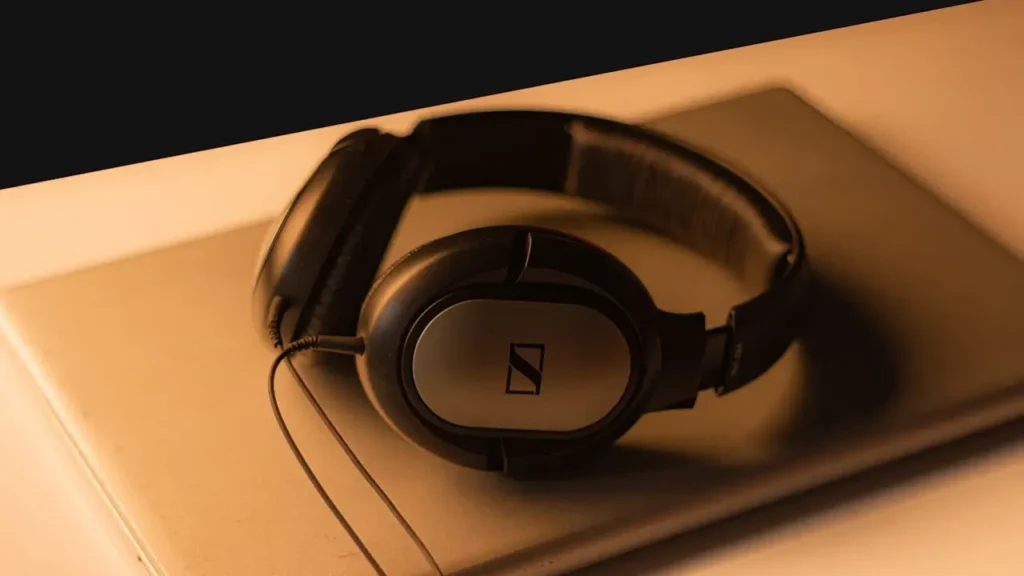
Wired headphones operate on a linear principle. Audio leaves the device as an electrical waveform and enters the driver through a continuous copper channel.
In the context of wireless earbuds vs wired headphones, this structure removes intermediate processing layers. No packetization occurs. No decoding overhead exists inside the headphone itself.
Electrical signal integrity remains the central advantage. What enters the cable is what reaches the driver, with minimal transformation.
There is no internal communication delay. No synchronization logic between channels. Left and right channels behave like two physical extensions of the same signal source.
Simplicity becomes stability.
Signal Integrity and Audio Fidelity Behavior
| Metric | Wireless Earbuds | Wired Headphones |
|---|---|---|
| Signal Transmission | Bluetooth compressed packets | Direct analog electrical flow |
| Latency | Moderate due to processing stages | Near-zero perceptual delay |
| Power Source | Internal rechargeable battery | Powered by connected device |
| Audio Fidelity | Codec-dependent consistency | Stable waveform reproduction |
| Mobility | High freedom of movement | Limited by cable length |
Sound reproduction depends heavily on how accurately a device preserves waveform detail during transmission.
Understanding how audio compression affects signal quality requires familiarity with modern wireless audio codecs and transmission methods.
In wireless earbuds vs wired headphones, wired systems preserve more of the original analog signal path. High-frequency detail remains intact because it does not pass through compression algorithms.
Wireless systems introduce codec-based compression. SBC, AAC, and newer adaptive codecs reduce bandwidth usage. That reduction changes waveform density before reconstruction even begins.
The result is not failure. It is controlled loss.
Engineers accept this trade-off to maintain stable wireless streaming under variable network conditions. Stability replaces purity in design priority.
Latency and Timing Accuracy
Latency defines how quickly sound reaches the ear after production.
In wireless earbuds vs wired headphones, latency divergence is structural. Wired systems transmit signal at near-light speed through copper. Delay is negligible for human perception in most use cases.
Wireless systems introduce multi-stage latency. Encoding, transmission, decoding, and synchronization all add time offsets.
For casual listening, the brain compensates. For real-time audio tasks, the delay becomes noticeable.
This is why wired systems still dominate studio monitoring environments. Timing accuracy matters more than mobility in those contexts.
Sharp response. No buffer.
Power Dependency and Energy Architecture
Energy behavior defines long-term usability.
In wireless earbuds vs wired headphones, wireless systems operate as closed-loop energy devices. Every playback cycle drains internal batteries. Charging cycles define lifespan and availability.
Wired headphones do not participate in energy storage. They act as passive transducers. Power originates entirely from the source device.
That removes failure points linked to battery degradation. It also removes maintenance overhead.
One system depends on energy cycles. The other depends on signal continuity.
Mobility Engineering and Physical Constraints
Wireless earbuds eliminate cable drag entirely. That design shift redefines user movement patterns.
Within wireless earbuds vs wired headphones, mobility is not just convenience. It is mechanical freedom from tether resistance, snag points, and motion constraints.
However, physical independence introduces spatial dependency. Earbuds must maintain stable Bluetooth proximity. Walls, interference sources, and distance all influence signal quality.
Wired systems trade mobility for reliability. The cable enforces a deterministic connection path. No environmental variability alters signal flow.
Controlled friction versus environmental freedom.
Comfort Architecture and Wear Duration
Comfort emerges from mechanical load distribution.
In wireless earbuds vs wired headphones, earbuds rely on ear canal seating and silicone stabilization. Weight remains minimal but pressure becomes concentrated in a small contact area.
Wired headphones distribute weight across the skull and ears. Over-ear designs shift load away from internal ear structures, allowing extended listening without localized pressure buildup.
Short sessions favor earbuds. Extended sessions favor over-ear wired systems.
The body responds differently to contact density versus distributed support.
Device Compatibility and System Integration
Device ecosystems influence usability more than raw audio capability.
The importance of ecosystem integration extends beyond personal audio devices. Modern Smart Home Automation Systems rely on the same principle, where connected devices communicate seamlessly to execute commands and maintain a consistent user experience across an entire environment.
In wireless earbuds vs wired headphones, wireless systems integrate through Bluetooth stacks embedded in modern operating systems. Pairing replaces physical connection. Bluetooth communication standards define how wireless audio devices establish connections, manage data transmission, and maintain compatibility across different hardware platforms.
Wired systems depend on port availability. USB-C and legacy audio jacks define compatibility boundaries. Adapters act as translators between analog and digital domains.
Device manufacturers increasingly remove analog ports. That shifts ecosystem gravity toward wireless adoption.
Still, wired systems remain universally interpretable when a port exists.
Economic Efficiency and Value Logic
Cost structures diverge based on internal complexity.
In wireless earbuds vs wired headphones, earbuds allocate budget toward chipsets, batteries, and wireless transceivers. Manufacturing cost rises due to component density.
Wired headphones allocate cost toward drivers and acoustic housing. Fewer electronic components allow higher audio investment per dollar.
This creates a value inversion at similar price points. Wired systems often deliver stronger raw audio performance per unit cost. Wireless systems invest in convenience engineering rather than acoustic optimization.
Different priorities. Different outputs.
Practical Usage Contexts
Usage scenarios define optimal selection more than specifications alone.
In wireless earbuds vs wired headphones, earbuds align with movement-based routines. Commuting, exercise, and short listening cycles fit their architecture.
Wired systems align with stationary environments. Editing, focused listening, and long-duration sessions benefit from uninterrupted signal flow and stable power.
Neither system replaces the other. They occupy separate behavioral contexts.
System-Level Reality of Audio Choice
Audio devices do not compete on a single metric. They compete on system behavior under constraints.
In wireless earbuds vs wired headphones, wireless systems optimize for autonomy under motion. Wired systems optimize for fidelity under stability.
The trade-off is structural, not temporary.
No software update removes it. No incremental upgrade erases it.
Each system reflects a different engineering philosophy embedded in physical design.
Are wireless earbuds better than wired headphones for sound quality?
No. Wired headphones maintain more consistent waveform integrity because audio bypasses compression codecs and wireless transmission stages.
Do wireless earbuds always have latency issues?
Yes. All Bluetooth systems introduce processing delay, although modern codecs reduce it to levels acceptable for casual use.
Can wired headphones deliver better audio detail?
Yes. Direct electrical transmission preserves higher-frequency detail without compression losses found in wireless audio paths.
Are wired headphones becoming outdated?
No. They remain widely used in professional audio environments where timing accuracy and signal fidelity are critical.
Which is better for workouts?
Wireless earbuds. Cable-free design removes physical restriction during movement-based activities.
Is Bluetooth audio lossless?
No. Most Bluetooth transmission uses lossy compression to maintain stability across varying signal conditions.