

In This Article
Every single day, AI is making decisions for you, and most people never notice. It sits inside your phone, your Netflix queue, your doctor’s diagnostic tools, and the map that rerouted you around traffic this morning. Most people type what is artificial intelligence into Google at night because they feel left behind by a world that has already changed around them.
You do not need a computer science degree to understand it. You just need someone to explain it straight. That is what this guide does: no jargon, no hype, just a clear look at how AI actually works in your everyday life.
What Artificial Intelligence Means
Artificial Intelligence means teaching a machine to think, learn, and make decisions faster than any human, without ever getting tired or forgetting anything. Think of it as a digital brain that watches patterns, absorbs information, and gets smarter with every interaction. Not magic.
Not science fiction. Just human intelligence, mirrored inside a computer and trained on real-world data to solve real-world problems. Here is the honest truth about AI: every time Netflix recommends a show, Google finishes your sentence, or your phone unlocks with your face, that is AI reading patterns and responding in real time. It has been inside your daily life for years. You just did not have a name for it.
If the idea still feels big, think of it this way. You do not need to understand how electricity works to turn on a light. You do not need to understand AI’s code to benefit from everything it offers. The only shift you need to make is this: stop thinking of AI as something that replaces your intelligence, and start seeing it as something that multiplies it.
How Artificial Intelligence Works
At its core, AI works the way any learner does: it takes in information, spots patterns, adjusts, and gets better every time.
The difference is speed and scale. AI processes millions of data points, your clicks, searches, and habits, finds the hidden patterns inside them, and uses those patterns to make accurate decisions on its own.
The more data it absorbs, the sharper it gets. That is why AI sometimes feels like it knows what you want before you ask.
Whenever AI feels mysterious, remind yourself of one simple truth: it is a pattern-recognizer. Nothing more. A machine that learned from examples the same way you learned from experience, just faster, and at a scale no human brain could match.
You can already see it working in your own life.
The moment your email filters spam, your map reroutes around traffic, or your phone completes your sentence, that is AI’s learning paying off in real time. It is not guessing. It is recognizing a pattern it has seen a thousand times before.
The best way to get comfortable with AI is to use it. Interact with it daily and notice how it improves the more you engage, because your interaction is literally part of what makes it smarter.
Understanding how AI works will not just ease the anxiety. It hands you the confidence to use it boldly, shape it wisely, and never feel left behind in a world that is not slowing down for anyone.
Machine Learning and Data
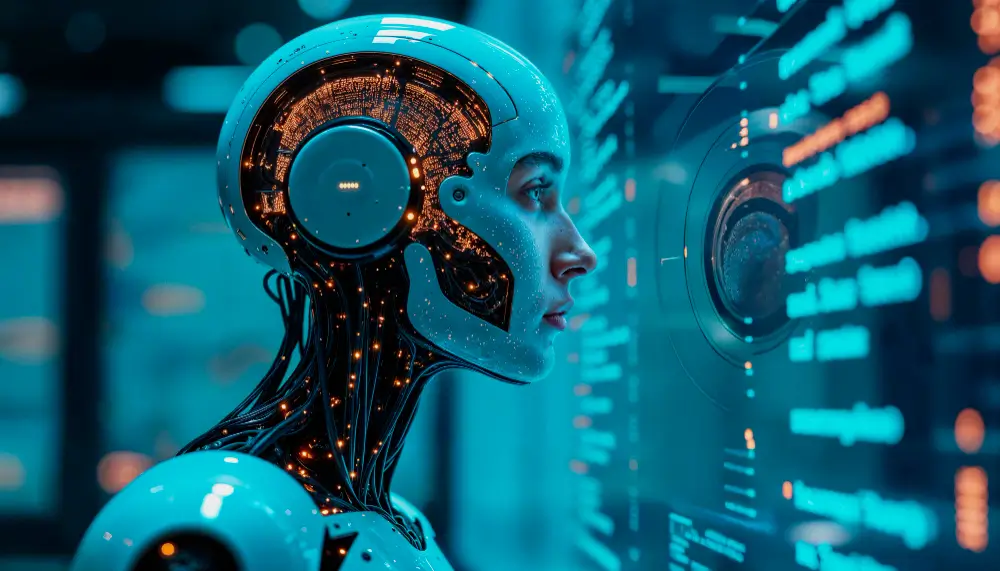
Machine learning and data share a simple but powerful relationship; data is what machine learning feeds on, and without enough of it, even the smartest AI system fails. Every click, skipped song, paused product, or typed search generates data. Machine learning collects it, studies the patterns inside it, and uses those patterns to predict what you will do next.
That is not a coincidence. That is the entire system working exactly as designed. One thing most people get wrong: AI is not purely about code or computers. Data is the real engine behind every smart decision AI makes. And here is the part that actually matters: quality beats quantity every time. Clean, honest, detailed data produces sharp, reliable AI. Messy, incomplete data produces recommendations that feel random and decisions that feel off.
You have already seen this in your own life. The apps that feel most personal to you are the ones that have collected the most detailed data about your specific behavior. The recommendations that miss completely are almost never a technology problem; they are a data quality problem.
Once you understand this, AI stops feeling like a mystery and starts feeling like a system, one with clear inputs, clear outputs, and clear reasons for why it gets things right or wrong. That shift in thinking is what separates people who feel intimidated by AI from people who use it with confidence.
Artificial Intelligence in Smartphones
Your smartphone is already the most advanced AI device you own, and most people use about 10 percent of what it can actually do. Your phone does not just wait for commands. It watches how you use it, learns your habits, and makes quiet adjustments in the background, managing battery life, optimizing your camera the moment it detects a scene, filtering notifications, and recognizing your face in milliseconds.
That is not a feature. That is AI running constantly, invisibly, on your behalf. Most people know Siri exists. Far fewer actually use it. That is the first missed opportunity; your AI assistant gets smarter the more you talk to it, so ignoring it means leaving a tool unused that was built specifically to learn your preferences. Battery anxiety is another one. Your phone’s AI already monitors your charging patterns and adjusts power use on its own.
Let it. Stop manually killing apps and dimming screens; the system manages this better than you do. Night photography used to require expensive equipment and real skill. Now your phone’s AI handles lighting, sharpness, and scene detection automatically. Tools like Camera Coach on Pixel devices even guide you on angles in real time. A beginner with an AI camera consistently takes better shots than an expert without one.
And if you think all of this requires an expensive flagship phone, it does not. Chipsets like the Snapdragon 8s Gen 3 are bringing these features to mid-range devices. The AI-powered phone experience is no longer a luxury. It is already within reach, wherever you are.
Artificial Intelligence in Online Services
That feeling of the internet knowing you, recommending the exact show you needed, finishing your address before you type it that is not a coincidence. That is AI running quietly behind every platform you use. AI tracks your behavior, learns your preferences, and shapes your experience in real time.
The platforms that feel most personal are simply the ones that have been watching your patterns the longest. Chatbots are the most visible version of this. To understand how these platforms actually reach you in the first place, read our complete guide on how the Internet Works. Instead of sitting on hold or digging through help pages, AI answers questions, troubleshoots issues, and handles transactions instantly, available at 3am when no human agent is. Most people ignore the thumbs-up and thumbs-down buttons on Netflix and YouTube. That is a mistake.
Those small signals are direct input into the algorithm; the more honest feedback you give, the more accurately it learns your actual taste. One warning: do not hand over control entirely. Adjust your privacy settings. Tell platforms what you actually want. AI works best when you direct it. And if a chatbot is not solving your problem, stop pushing it. Escalate to a human. Knowing when AI has hit its limit is the smartest move you can make.
Artificial Intelligence in Transportation
If you have ever sat in a traffic jam wondering why no one has fixed this yet, AI in transportation already has. Most people just do not know it is running. Google Maps and Waze are not just digital maps. They analyze real-time traffic data, predict congestion before it builds, and reroute you around problems other drivers are still sitting in.
Meanwhile, intelligent traffic systems adjust signal timing on the fly and clear paths for emergency vehicles automatically.
Inside your car, AI is working too. Lane-keep assist, adaptive cruise control, drowsy driver alerts, and automatic emergency braking are not gimmicks. They are systems that track patterns, detect danger faster than human reflexes, and intervene before a mistake becomes an accident.
If your car has any of these features, use them. That is the simplest safety upgrade available to you right now, and it costs nothing extra. Parking is another one. Stop circling blocks. AI-powered parking apps read live occupancy sensors and show you exactly where a spot is open, saving fuel, time, and the specific frustration that makes city driving feel unbearable.
And that bus delay notification on your transport app is not just an alert. Nearly 90 percent of public transport companies now use AI to optimize routes and scheduling in real time. The notification exists because the system has already adjusted, and it is protecting your time without asking you to do anything. Transportation AI is not coming. It is already on the road with you, every single day.
Artificial Intelligence in Healthcare
That fear in a hospital waiting room, wondering if something is being missed, is exactly the problem AI in healthcare was built to solve. AI diagnostic tools now analyze X-rays, MRIs, and CT scans with accuracy between 76 and 90 percent, often outperforming physicians on mammograms and skin lesion detection. The difference is that AI does not get tired, does not have an off day, and does not miss the subtle pattern that appears at hour ten of a twelve-hour shift.
In 2025, AI-enhanced telehealth handles up to 50 percent of patient needs for chronic conditions like diabetes, hypertension, and heart disease. If you live far from a specialist, that gap no longer means inferior care. It just means a screen instead of a waiting room. If you wear a smartwatch, take it seriously. The AI inside it monitors heart rhythm, sleep quality, and physical patterns continuously, flagging warning signs long before you feel any symptoms.
That head start is not a feature. It is potentially the most important health tool you own. Those medication reminder notifications are worth following, too. AI-supported adherence programs have shown cost savings of 31 percent for hypertension patients and 32 percent for diabetes patients, simply because people took their medicine consistently. The easiest health win available is the one most people keep dismissing.
Before your next doctor’s visit, use a reputable AI symptom checker to organize what you are experiencing. AI currently supports roughly 66 percent of physicians in clinical decisions. Walking in informed does not replace your doctor; it makes the appointment more useful for both of you. And if you manage a chronic condition, ask about remote monitoring. AI wearables can alert both you and your doctor the moment readings shift, catching the warning before it becomes a crisis.
Artificial Intelligence in Education
That midnight moment, staring at a textbook, too embarrassed to admit you still do not understand, AI in education was built for exactly that. No judgment. No frustration. No social pressure of getting something wrong in front of others. Just a patient, always-available tool that meets you exactly where you are.
The results back it up. Students in AI-powered learning environments score 54 percent higher on tests, show 30 percent better learning outcomes, and engage ten times more than in traditional classroom settings. That is not a future promise; it is already happening for students using these tools today. Start with the subject that scares you most. Free tools like Khan Academy’s Khanmigo or ChatGPT assess your individual strengths and weaknesses and build a learning path around you specifically, something a classroom of thirty students can never offer.
When you use these tools, do not just ask for answers. Ask for step-by-step explanations, then ask to be quizzed. The learning gain comes from being pushed beyond surface understanding, not from copying a result. For parents, around 40 percent of a teacher’s time currently goes to grading. AI is automating that burden, which means teachers get more face-to-face time with your child. AI is not replacing the classroom. It is freeing up the humans inside it.
And the most important tip: never let AI replace your own thinking. It handles practice, personalization, and content delivery brilliantly. But creativity, empathy, and genuine inspiration still come from humans. Use AI as your smartest study partner, not your shortcut.
Limits of Artificial Intelligence
Here is the truth nobody leads with when talking about AI, it is powerful, but it is not reliable enough to trust blindly, and the consequences of forgetting that are real. The best AI models in the world still hallucinate between 3 and 18 percent of the time. They generate completely false information with total confidence. MIT research found that AI is 34 percent more likely to use words like “definitely” and “certainly” precisely when it is wrong. AI Limitation Real Example What To Do Hallucination Cites laws and cases that do not exist Always verify through original sources Overconfidence Uses “definitely” when it is wrong Treat confidence as a warning sign Bias in data 30% error rate for dark-skinned women in facial recognition Always demand human review Lack of common sense Fails in hiring, medical, and policing decisions Never let AI make final decisions alone
The more certain it sounds, the more carefully you should verify it. Real attorneys have faced court sanctions for submitting AI-generated legal research that cited cases that simply do not exist. That is not a hypothetical risk. It already happened. For anything legal, medical, financial, or academic, verify every AI output through original sources before acting on it.
When using any AI tool, ask it to provide sources. Not because it will always comply accurately, but because the habit of checking forces you to stay in the loop rather than outsourcing your judgment entirely.
AI also carries bias baked in from the data it learned on. Facial recognition systems show error rates exceeding 30 percent for dark-skinned women. Healthcare AI trained mostly on data from white patients has produced inaccurate diagnoses for minority groups. These are not edge cases. They are documented failures in systems people trusted with serious decisions.
Never let an AI system make a final call on your job application, loan, or healthcare without demanding human review. Your identity and your circumstances deserve a human being in that loop, every single time. AI is worth using. It is not worth trusting without question.
How Artificial Intelligence Affects Daily Life
Whether you realize it or not, you already live with AI, and that quiet invisibility is exactly why it matters to understand it.
Every morning, your phone predicts your commute. Every evening, Netflix knows your mood. Your email finishes sentences before you do. AI moved into your daily life without announcing itself.
The numbers say it clearly. AI experts confirm that 79 percent of people interact with AI constantly every day. Only 27 percent realize they are doing it. Most of us are being shaped by something we do not even notice.
That is not a reason to panic. It is a reason to pay attention.
Take at least one moment each day completely away from digital tools. A walk, a book, ten minutes of silence. Your brain needs breathing room; no algorithm can give it. If you feel mentally drained or unable to make simple decisions by evening, research confirms that prolonged AI use causes cognitive fatigue and weakens personal agency. The fix is simple: limit how many decisions you hand off to AI each day.
Guard your data. Every AI-powered app runs on it. Read privacy settings and know what you are agreeing to, because your data is the fuel keeping these systems running. And the most important shift for 2025 is not to avoid AI, but to not surrender to it. Pick two or three tools that solve your biggest daily frustrations, learn them properly, and ignore everything else. Intentional use is the advantage. Blind dependency is the trap.
Conclusion
You made it to the end, and the most important thing to carry forward is this: AI is not a future technology. It is already your reality. It runs inside every app you open, every search you make, and every recommendation that feels like it read your mind. That is not a coincidence. That is a system that has been learning from you for years.
The future of AI will not be decided by how advanced it becomes. It will be decided by how responsibly people use it, and that starts with ordinary choices made every single day. Workers with AI skills carry a 56 percent wage premium over those without. Investing even one hour a week in learning how AI works in your field is one of the highest-return decisions you can make right now.
But do not lose sight of what AI cannot replace. Empathy, creativity, critical thinking, 83 percent of employees say these human skills will become more valuable as AI grows, not less. Nurture them. They are your edge. And approach every AI tool as a guide, not a passenger. Humans who stay in the loop produce 40 percent more accurate outcomes than those who hand over judgment entirely.
The future belongs to people who learn to guide AI with wisdom and conscience, not those who fear it, and not those who follow it blindly. You now understand how it works. Use that knowledge boldly, share it generously, and step into this world with confidence.
What is artificial intelligence in simple words?
Artificial Intelligence is simply teaching a machine to think, learn, and make smart decisions the way a human brain does. It works by feeding computers massive amounts of real-world data, your clicks, searches, and habits, so they can recognize patterns and predict what comes next. Every time Netflix recommends a show, Google finishes your sentence, or your phone unlocks with your face, that is AI working in your everyday life.
What is an AI example?
The most powerful AI example is already sitting in your pocket, your smartphone. Every time Siri answers your question, your camera automatically adjusts for a perfect shot, or your phone unlocks with just your face, that is AI making split-second decisions on your behalf.
But it goes further than your phone, Google Maps rerouting you around traffic, Netflix knowing your mood, and your email finishing your sentence are all AI working silently in your everyday life.
Which type of AI is ChatGPT?
ChatGPT is a Generative AI, meaning it does not just recognize information; it actually creates brand-new responses from scratch. It is learned by reading massive amounts of text from the internet, books, and articles.
Until it understood human language well enough to write, explain, and answer questions like a person would. Simply put, every time ChatGPT gives you an answer, it is not copying from somewhere; it is genuinely generating something new in real time.
Advantages of artificial intelligence?
The biggest advantage of AI is simple: it does in seconds what would take a human hours, days, or sometimes a lifetime to figure out. It never gets tired, never forgets, and processes millions of data points simultaneously.
Detecting diseases earlier than doctors, predicting traffic before it builds, and personalizing your entire digital experience in real time. From saving lives in hospitals to saving time in your inbox, AI’s greatest advantage is that it quietly handles the heavy lifting so you can focus on what actually matters.
What is artificial intelligence in computers?
In computers, AI is simply the technology that allows machines to learn and make smart decisions on their own, without being told what to do every single time. It works by studying patterns in data, the same way your brain learns from experience.
Getting sharper, faster, and more accurate with every interaction. Every time your computer filters spam, autocompletes your search, or recognizes your face on screen, that is AI thinking quietly in the background.