

In This Article
Your content gets traffic. Your SEO looks fine. Then you open ChatGPT, search your category, and your competitors are right there. You are not. Knowing how to compare AI search optimization tools is now the most important skill every marketer needs, because the wrong tool wastes your money and keeps your brand invisible where millions of buyers are searching.
The usual mistake: pick the one with the nicest dashboard, then spend six months wondering why you still do not show up in ChatGPT, Perplexity, or Google AI Overviews. You do not need the most expensive option. You need something that actually tracks the AI engines your audience uses and tells you what to fix, not just flags what’s broken and leaves you guessing.
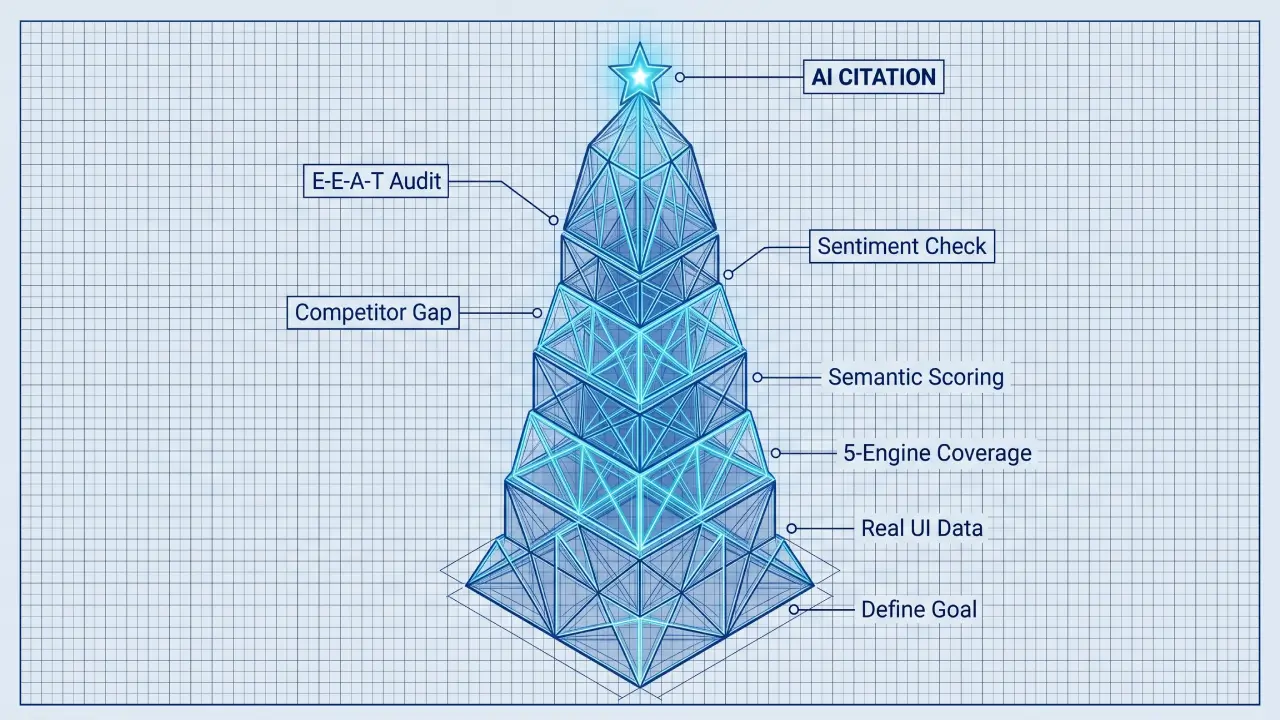
This guide walks through 7 decisions. By the end, you will know which tool is worth paying for and which ones are repackaged SEO tools with AI added to the marketing copy.
First, Ask Yourself: What Do You Actually Want From an AI Search Tool?
Before you open a single comparison page, ask yourself one honest question: what do you actually need this tool to do? Most people skip this. They go straight to pricing pages, pay for features they never use, and wonder why nothing has improved. Two different problems need two different tools.
If competitors keep showing up in ChatGPT while your brand does not, you need citation tracking, not a content writing assistant. If your content already ranks on Google but AI never references it, you need semantic scoring that tells you exactly what to rewrite. So before comparing anything, write down your single biggest pain point. Brand mentions? Content gaps? Competitor tracking? AI platform coverage?
Then split your goals into two buckets:
- Brand reputation: how often AI mentions you.
- Content optimization: making your content worth citing.
Most tools do one well. Not both. Pick based on which problem is costing you more right now. And forget the feature list. Match the tool to your problem. What works for a solo blogger is the wrong call for a marketing team. Know your problem first. The right tool becomes obvious.
Real User Prompts vs. API Data: (the secret most tools hide from you)
Here is something most tool vendors would not tell you: they are showing you API data, not what real users actually see when they type a question into ChatGPT or Perplexity. That gap matters. API responses skip personalization, ignore geography, and miss formatting changes in the actual interface. Your tool can tell you everything looks fine, while your customers are seeing your competitor instead.
It is like watching a recorded match, same game, wrong score. Three things to do before you trust any visibility report: Ask the vendor directly: Does your tool capture real user-facing responses or pull from the API? If they hesitate, you have your answer. Run a manual check: take 5 prompts your customers would actually type, search them yourself in ChatGPT and Perplexity, then compare with what the tool reports. If the numbers don’t match, the clean charts are lying to you.
Pay for UI tracking: tools that capture front-end responses cost more. Worth it. Bad data is more expensive than a higher subscription fee. You are paying to see reality. Not a polished version of it that feels reassuring while your competitors quietly take your customers.
Does It Track All 5 AI Engines or Just ChatGPT? (Big Difference)
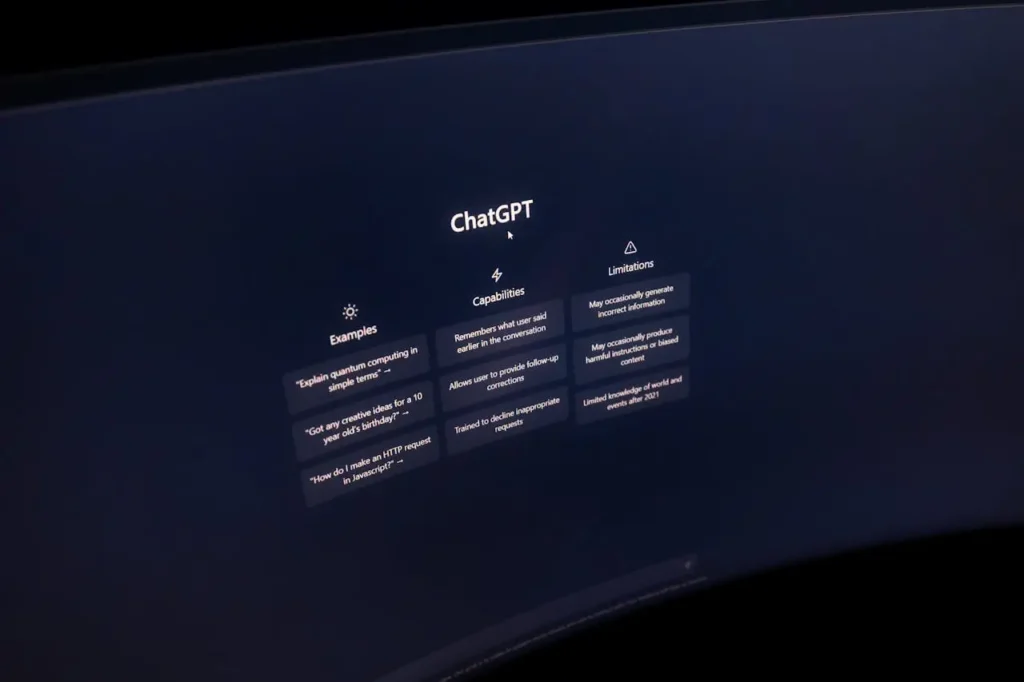
If a tool only tracks ChatGPT and calls itself complete, it is hiding a blind spot that is costing you, real customers. People are not just on ChatGPT anymore. They are jumping between Perplexity, Gemini, Google AI Overviews, and Claude, depending on what they are looking for and what they are used to. And here is the thing nobody mentions: these engines do not behave the same way. At all.
Perplexity cites sources obsessively. Gemini is growing faster than anything else right now. Google AI Overviews sit on top of billions of searches people were already doing. Claude tends to synthesize and explain rather than quote anyone directly. So ranking well on one tells you almost nothing about the others. To understand how Claude works differently from other AI engines, check out our detailed breakdown: Claude Design by Anthropic.
Your brand can look great in ChatGPT and not exist in Perplexity. If your tool never checks Perplexity, you will never know. That gap does not show up in any report; it just shows up in lost customers. Before picking a tool, figure out where your audience actually searches. Ask them. Check your analytics. Then make sure your tool covers all five engines, and not just weekly. AI answers shift fast. A weekly scan is basically useless.
You can not optimize for one room and wonder why the whole house is not yours.
Stop Counting Keywords: (Does it actually understand what your content means?)
Keyword stuffing is dead. AI engines killed it quietly, and most marketers still have not noticed. ChatGPT and Perplexity do not crawl your content looking for repeated phrases. If you are new to this and want to understand how AI actually thinks, read our complete guide on What is Artificial Intelligence before moving forward. They read it more like a well-read person would, scanning for depth, real expertise, and ideas that actually connect. If the substance is not there, they move on to someone else who is content.
That is why so much keyword-perfect content never gets cited. It looks optimized. It just is not useful.
Here is a simple way to think about it. Write an article on healthy eating without ever mentioning protein, vegetables, or nutrition. Use your main keyword twenty times. A smart AI figures out within seconds that the content is hollow. Keyword count doesn’t hide thin thinking.
So when you are testing tools, paste your actual content in. See what comes back. Topic modeling? Semantic relevance? Entity relationships? Good signs. A keyword density percentage? Walk away, it is measuring something that stopped mattering years ago. Also, look for tools that show you what top-cited sources are covering that you are not. Not a vague content score, the specific subtopics you’re missing. That is genuinely useful.
And check whether the tool runs on real NLP technology. Google’s Natural Language API, or something comparable. Tools built on that understand content the way AI engines do. The ones that aren’t are mostly just guessing. The brand that covers a topic completely gets cited. Not the one that repeats a keyword the most.
Can It Tell You Why Your Competitor Gets Cited and You Don’t?
Keyword stuffing is dead. Most marketers have not accepted it yet. ChatGPT and Perplexity do not scan for repeated phrases. They read for depth, connected ideas, and actual expertise. No substance? They cite someone else. Here is the simplest way to see it. Write about healthy eating, without mentioning protein, vegetables, or nutrition. Use your keyword twenty times.
A smart AI sees through it instantly. Keyword count never hid thin thinking. Before trusting any tool, paste your best content in. Does it show topic modeling, semantic relevance, and entity relationships? Good. Does it hand you a keyword density percentage? Leave. The tools worth paying for show you the exact subtopics competitors are covering that you are not. Not a vague score, the actual gaps to fix before you publish.
Also check: does it run on real NLP technology? Tools built on Google’s Natural Language API understand content the way AI engines do. Tools that are not are mostly guessing. The brand that covers a topic most completely gets cited. Not the cleverest keyword, not the best meta description. Just depth and coverage.
If your tool can not measure that, it is keeping you busy, not moving you forward.
Sentiment Check: Is AI Saying Good or Bad Things About Your Brand?
AI mentioning your brand is not the win it feels like. Also, the options and the best choice look similar in a visibility report. To a buyer, they are completely different. One gets clicked. One gets scrolled past. The scary part is not negative sentiment. It is neutral. Most brands are sitting in neutral right now and have no idea.
Go check. Type your brand name into ChatGPT and Perplexity. Read what comes back, not whether you appear, but exactly how you are described. Flat language, caveats, faint praise. That is a problem your current tool probably is not showing you. Three things worth knowing: Sentiment shifts fast. One bad review, one competitor PR push, your description can flip from positive to neutral in days. You need to catch it early.
Your website is not the source. Around 85% of AI brand mentions are pulled from reviews, forums, and third-party articles. Fixing your own content would not fix your reputation. Mentions without context are useless. Your tool should show you the exact words AI uses about you, not just that you appeared.
Your brand reputation in AI search is what AI tells someone who has never heard of you. Not your about page. Not your tagline. If you are not reading that conversation regularly, your competitors are benefiting from it.
E-E-A-T Still Matters in the AI World: (Does your tool even check it?)
Everyone flooded the internet with AI content. Now, AI engines are drowning in look-alike articles and have gotten very selective about what they actually cite. The filter is E-E-A-T: Experience, Expertise, Authoritativeness, Trustworthiness. Most brands are failing it and do not know it.
ChatGPT and Perplexity are not just checking accuracy. They are checking whether they can trust the source. No author bio, no credentials, no original research, your content sits at the bottom of the citation queue. Does not matter how well it is written. Most AI tools never catch this. They report your mentions while completely ignoring whether the trust signals that earn those mentions even exist on your site.
Three quick checks: Do your articles have a named author with a real bio and verifiable credentials? Anonymous content gets ignored the same way a doctor ignores an unsigned prescription. Does your tool audit E-E-A-T at all? If it can not check the author schema, external mentions, or original data, it is missing your biggest problem.
Are people outside your website vouching for you? Industry features, trusted reviews, and one piece of original research. Third-party proof carries far more weight than anything on your homepage. The brands winning AI citations right now are not publishing the most content. They are the ones AI trusts enough to recommend to a complete stranger. If your tool can not tell you whether you have earned that trust, it is the wrong tool.
Free Tools vs. Paid Tools: (where to start without wasting money)
You opened your laptop to grow your business. Thirty seconds later, you are drowning in Pro Plans, Premium Upgrades, and Unlock Full Features, and you have not done anything yet. Here is the truth nobody selling you a tool will say: most beginners do not fail because they lack paid tools. They fail because they paid for tools they didn’t know how to use yet.
Start free. Genuinely free tools, HubSpot CRM, Mailchimp, Trello, Canva, cover marketing, communication, and design basics without touching your wallet. They are not consolation prizes. They are enough to get started. Two rules worth keeping: Spend 30 days mastering one free tool completely before paying for anything. A tool you know deeply beats an expensive tool you barely open.
Use the free version until the limitations actually frustrate you; that frustration is your real signal to upgrade, not an ad telling you are missing out. Never subscribe to more than one paid tool at a time. Most people pay for five, use none properly, and wonder why nothing is working. Keep it lean. Upgrading feels like progress. It is not always. Knowing your tools well is progress. Start free. Stay focused. Only pay when growth genuinely demands it
Quick Reference: 9-Step Checklist at a Glance
| Step | What to Check | Red Flag to Avoid |
| Define your goal | Write down your single biggest pain point before comparing any tool | Jumping straight to pricing pages without knowing your problem |
| Check data source | Ask vendor: real UI responses or API data? | Tool pulls API data but calls it “real user data” |
| Engine coverage | Tool must track all 5: ChatGPT, Perplexity, Gemini, Google AI Overviews, Claude | Tool only tracks ChatGPT and calls itself complete |
| Semantic scoring | Look for topic modeling, entity relationships, semantic relevance | Tool only shows keyword density percentage |
| Competitor gap analysis | Tool shows exact subtopics competitors cover that you do not. | Tool gives vague content score with no actionable gaps |
| Sentiment tracking | Tool shows exact words AI uses to describe your brand | Tool shows mentions but not how you are described |
| E-E-A-T audit | Tool checks author bio, credentials, external mentions, original data | Tool tracks citations but ignores your trust signals |
| Scan frequency | Tool scans daily or in real time | Tool scans once a week while AI answers shift daily |
| Free vs Paid | Master one free tool for 30 days before upgrading | Paying for 5 tools at once and using none properly |
Texora Verdict
Long-term user reports tell a consistent story: most marketers buying AI search optimization tools are paying for dashboards, not decisions. The gap between what these tools promise and what they actually deliver shows up fast, usually around month two, when brand visibility has not moved, and the reports still look clean. API-fed data, single-engine tracking, and keyword-level analysis are the three failure points that keep showing up.
Paying for surface metrics while your real trust signals go unchecked is not optimization. It is expensive guesswork. The tools worth paying for do three things: track real user-facing responses across all five major AI engines, audit your E-E-A-T signals, and show you exactly what competitors are covering that you are not. Everything else is a repackaged SEO tool with an AI badge. Start free, stay focused, and only upgrade when your growth genuinely demands it, not because a pricing page made you feel behind.
What are the most effective AI tools for search engine optimization?
Most marketers pick the wrong tool and stay invisible. Tools like Semrush, Ahrefs, and Surfer SEO cover the basics, but for AI search, BrandWell and Profound track real responses across ChatGPT, Perplexity, and Gemini. Look for semantic scoring, E-E-A-T auditing, and competitor gap analysis.
How can I evaluate and compare different AI tools fairly?
Most people compare tools by price and design, and end up paying for the wrong one. Paste your actual content into each tool and see what comes back. Topic modeling, semantic scoring, and E-E-A-T auditing beat a pretty dashboard every time. Always run a manual test across ChatGPT and Perplexity before trusting any tool for a visibility report.
Is SEO dead or evolving in 2026?
SEO is not dead; it just changed the rules. Keywords alone would not cut it anymore because buyers are now getting answers directly from ChatGPT and Perplexity before they ever hit a search page. Smart brands are optimizing for both traditional search and AI citations, and the ones ignoring AI are quietly losing customers.
What are the different AI search tools?
Not all AI search tools do the same thing, and picking the wrong category is where most marketers waste money. ChatGPT, Perplexity, Gemini, Google AI Overviews, and Claude are the AI engines where your brand needs to show up. Tools like BrandWell, Profound, and Semrush help you track, optimize, and fix how those engines describe you.
Which is the best free SEO tool?
The best free SEO tool is the one you actually learn to use properly, not the one with the longest feature list. Google Search Console and Ahrefs Free give you real data on how your content performs without spending a rupee. Start there, master both completely, and only upgrade when the limitations genuinely slow you down.