

In This Article
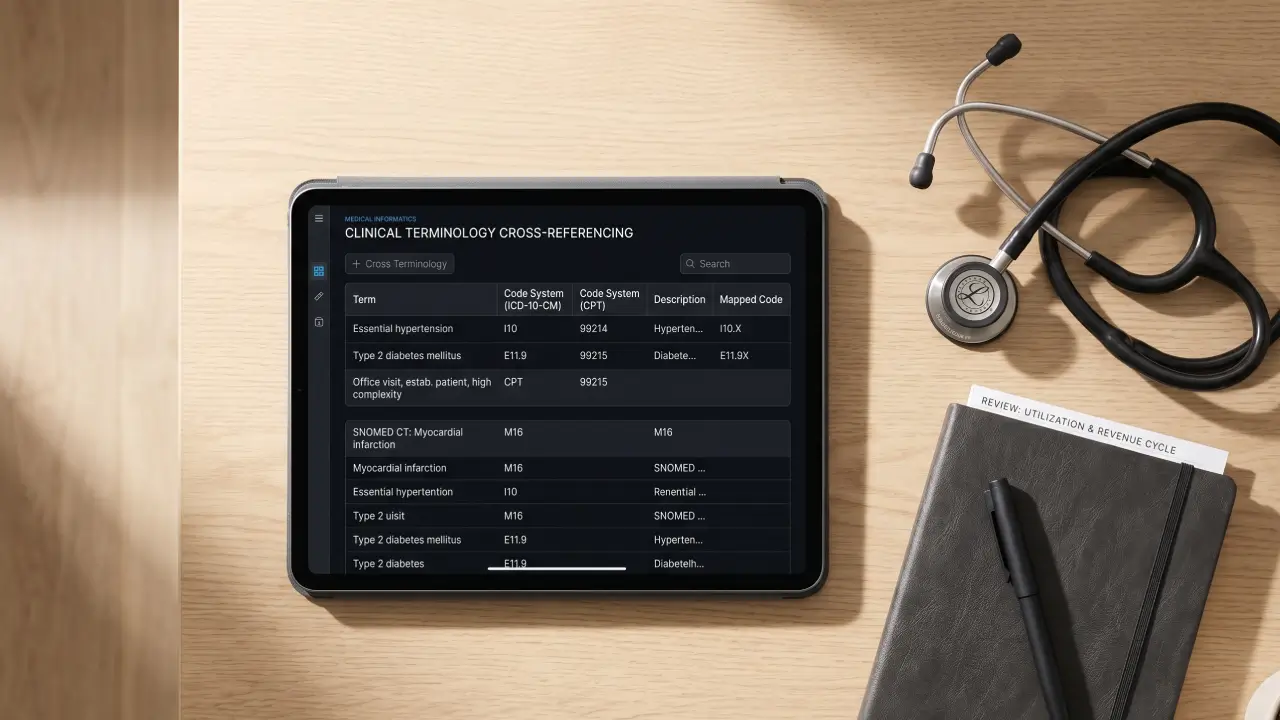
Medical coders already know the problem. Thousands of notes, 68,000+ ICD-10 codes, one wrong pick, denied claim, start over. It burns people out. A handful of free AI medical code mapping tools now do the lookup automatically.
You paste the clinical note, and they suggest the codes. Most take under 30 seconds, and they are updated for the new CPT 2026 AI service codes.
This guide covers 9 of them. All free, all browser-based, no IT department required. Solo practice or billing team, it does not matter.
How to Pick the Right Free Tool Before You Waste Another Hour
Most coders have been there. Download five tools, spend a morning setting them up, and use none of them properly. That is not your problem; it is a setup problem. Nobody told you what to figure out first. Here is the one question worth asking before you touch any free AI medical codes mapping tool: What coding task is actually eating most of my day?
ICD-10 from clinical notes? CPT mapping? Batch ICD-9 conversions? Your answer picks the tool. Not the reviews, not the feature list. Three things to check before committing: Code type match. A tool built for ICD-10 lookups will fail you completely if your work involves CPT-to-diagnosis cross-mapping. This mismatch is why most coders quit a tool after two days. Volume limits. A 50-chart daily cap is fine for solo practice. For a billing team running 200 encounters a morning, it’s a bottleneck by 10am.
Test it on your own notes. Three real charts from your specialty, five minutes. If the suggested codes match what you’d have coded manually, it works for you. Generic accuracy percentages on a homepage mean nothing. One more thing: before entering any patient data, find the privacy policy and look for one specific confirmation: that your PHI is never used to train public AI models. If that line is not there, move on.
For a broader look at staying protected online, see What Cybersecurity Is. Top 5 Things Every User Must Know.
Tool #1: ICDcodes.ai: Find Any ICD-10 Code From Plain Clinical Language
You type “left knee swelling after fall” into a search bar and get 47 results that still don’t tell you the billable code. ICDcodes.ai skips that entire loop, types the condition in plain language, and gets the ICD-10-CM code in seconds. It handles full clinical notes, too. Paste one complex encounter, get every diagnosis coded at once instead of running five separate lookups. A few things worth knowing before you rely on it:
Check the code set date. The April 2026 ICD-10-CM update added 288 new codes with revised guidelines. Confirm the tool reflects the current set before submitting claims; an outdated code is a fast path to denials. Higher confidence is not always right. The tool ranks suggestions by confidence score, but the top result would not always fit your specific documentation. Laterality, episode type, and sequencing need a human eye.
Always review before submitting. AI gets you most of the way there. Your clinical judgment closes the gap that protects your revenue. Bonus for students and residents: code a diagnosis manually first, then check against the AI output. That one habit builds accuracy faster than any textbook.
Tool #2: Medical Coding Generator: Free, No Login, No Excuses
No signup. No email verification. No onboarding flow. The Medical Coding Generator on There is an AI for That opens in your browser and starts working the moment you paste your clinical data.
Input a diagnosis, procedure, or full clinical note; it returns ICD-10, CPT, and HCPCS codes simultaneously, with a plain-language explanation for each one. That explanation is genuinely useful. It’s the difference between blindly accepting a code and actually understanding why it fits.
Three things to keep in mind:
- Verify against 2026 updates. The CPT overhaul added 288 codes and removed 84 others. Free tools sometimes lag on the most recent changes; a quick cross-check before submission is worth the 60 seconds.
- Use the explanation as your audit trail. Copy both the code and its reasoning into your billing notes. Reviewing the explanation, not just the code number, is the fastest way to catch context errors before they become denials.
- Paste the full note, not just a term. For encounters with both a diagnosis and a procedure, one complete clinical note gets you better results than two separate searches.
Treat it as a first draft, not a final compliance check. Two minutes of review costs a lot less than weeks of appeals.
Tool #3: SNOMED Navigator: Map Clinical Synonyms to Codes Instantly
Every clinic has that doctor who writes “heart attack,” while another writes “MI,” and a third writes “coronary occlusion.” Same condition, three different terms, and your coding system handles maybe one of them. SNOMED Navigator by YesChat AI recognizes all three as the same clinical concept and maps them to the correct SNOMED code instantly. No signup, no subscription, no keyword-matching frustration.
It handles medications too, search a drug term, get the active ingredient, SNOMED concept, and URI in one result. Useful for pharmacists and clinical researchers, not just billing teams.A few things worth knowing:
SNOMED is not for insurance claims. It is for clinical documentation, EHR integration, and research. If you need billing codes, you want ICD-10 or CPT. Knowing which system your task needs saves real time. Accept the refinement. Search “high blood pressure,” and it suggests “hypertension” with code 38341003. That more precise term gives you cleaner, more defensible documentation than your original input. Verify high-stakes codes manually. The tool hits 92% accuracy on standard terms. For research publications or regulatory submissions, cross-check against the official SNOMED CT browser; the 8% matters when one wrong code can compromise an entire dataset.
Tool #4: CodeMD: Speak a Condition and Get Your Code in Seconds
Bedside, hands full, three conditions in your head at once, the last thing you need is a desktop browser and a dropdown of 70,000 codes. CodeMD is a free mobile app that takes voice input. Say “acute appendicitis” or “type 2 diabetes with kidney complications,” and you have the ICD-10 code before you reach the next bed.
It also scans printed clinical notes with your phone camera, which matters for rural settings and home visits where laptops are not practical. A few things to know before relying on it:
- Use the guided path for complex diagnoses. Say “chest pain,” and the app asks follow-up questions to narrow down the right code. That guided flow beats a single-phrase voice search every time.
- Multilingual support is real. Doctors can speak in their native language and get correct ICD-10 codes back, a genuine fix for non-English-speaking providers coding under time pressure.
- Mobile for lookup, desktop for final review. CodeMD is fast and useful at the bedside. Modifiers, sequencing, and specificity are easier to verify on a full screen before submission.
One hard rule: never say a patient’s name or any identifying information aloud while using voice input in a shared space. Keep it to the clinical condition only. That is not a suggestion; it is a HIPAA requirement.
Understanding why starts with How Two-Factor Authentication Works; the same principles that protect accounts also protect patient data.
Tool #5: Find-A-Code IntelliSearch: Cross-Map CPT and ICD-10 Together
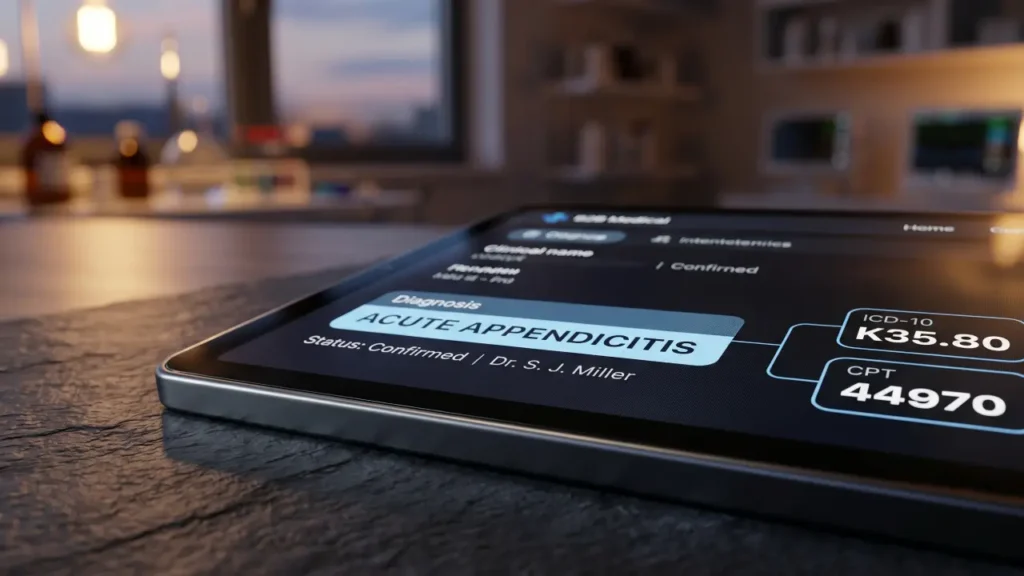
Two weeks of appeal letters over one mismatched code pair is a specific kind of painful. Find-A-Code IntelliSearch exists to stop that before it starts. It searches CPT, ICD-10, and HCPCS simultaneously and shows how the codes relate to each other, so instead of running three separate lookups and manually checking whether your diagnosis supports your procedure, you type once and get a cross-validated picture your billing team can actually use.
It handles ICD-9 to ICD-10 conversions, too, which still matters for legacy records and old insurance disputes. Three things worth knowing:
- Run NCCI validation before any multi-procedure claim. NCCI edits flag code pairs that insurers will automatically bundle or deny. Catching that conflict before submission saves the denial, the appeal, and the 30-day payment delay.
- Watch the real-time suggestions as you type. IntelliSearch surfaces code recommendations mid-query. Most lookups resolve in under 30 seconds if you follow where it points.
- It is built for complexity. Solo practitioners doing simple single-code lookups do not need this; simpler tools work fine. The moment your work involves crosswalks, multiple code sets, or multi-procedure encounters, this is the one to open first.
Always verify final code pairs against the 2026 NCCI edits table before billing. One unbundled claim caught before submission costs nothing. After that is a different story.
Tool #6: AAPC Codify Smart Search: Free Lookups From the Most Trusted Name in Coding
That 4:59 PM Friday CPT doubt has a name: it is the moment you wish you had a source you completely trust. AAPC Codify is the source, built by the organization that trains and certifies most of the coders using it. One thing to say upfront: Codify has no permanent free tier. It is a 14-day free trial, no credit card required. That’s still genuinely useful if you test it right.
What you get: CPT to ICD-10-CM, CPT to HCPCS, and CPT to modifier crosswalks in one search, plus an NCCI Edit tool that flags problematic code pairs before submission. The denial prevention alone pays for itself fast when you consider what a single appeal actually costs. Three things worth doing during the trial:
Test Historical Code Sets. Codify can revert to any prior year’s code set, useful for late claims, billing audits, and disputes involving encounters from years back. No other free tool on this list does this. Download quarterly NCCI versions for any active appeals. Documented proof that your code pair was compliant in a specific quarter is a real weapon in a denial fight.
Use it during your busiest week. Testing against your actual patient volume and your most complex claim types is the only honest way to know if the $10/month plan makes sense for your practice. A quiet week tells you nothing.
Tool #7: MapIT Tool: The Only Free Government Tool for ICD-9 to ICD-10 Batch Conversion
If your clinic is still sitting on years of ICD-9 records, and every legacy dispute or compliance audit means manually translating old codes one by one, MapIT handles that entire conversion in one batch process. It was built by AHRQ and the CDC specifically for this problem, which makes it the most trustworthy free tool for historical record conversion, full stop.
You upload a batch file of ICD-9 codes, it applies official CMS/NCHS General Equivalence Mappings, and outputs every corresponding ICD-10 code and description. Diagnosis codes, procedure codes, and external cause-of-injury codes all at once.
Three things to know before you start:
Format matters exactly. One code per line, no decimal points. “25000” not “250.00.” A single formatting error rejects the entire file. Fix your input before you upload, not after. Expect approximate matches, not exact ones. Over 97% of ICD-9 procedure codes have no exact ICD-10-PCS equivalent. MapIT gives you the starting list. A trained coder still needs to review every suggestion before it touches a claim or research dataset. It’s a desktop install, not a website. Windows only. Download the executable from the AHRQ Quality Indicators site, extract, and install.
Most first-time users waste 30 minutes looking for a browser login that does not exist. Use it for legacy conversion, audits, and research data. For day-to-day claim coding, other tools on this list serve you better.
Tool #8: Medical Coding Online: Clinical Notes to Codes With Denial Risk Alerts
Most denials don’t come from careless coding. They come from a code pair that quietly violated a payer rule nobody told you about. Medical Coding Online catches that before the claim leaves your system. It converts clinical notes into ICD-10, CPT, and HCPCS codes, then immediately runs a denial risk scan on everything it generates. No signup, no account, no credit card.
It is the only free tool on this list that does not just give you codes; it tells you how likely they are to get paid on the first try. Each code gets a confidence score. High-risk claims get flagged for human review; clean ones move forward. In practice, your billing team ends up focusing on the 5-10% that actually need attention instead of manually checking everything. Three things worth knowing:
Act on the flags; do not just read them. When the tool flags a high-risk code, it usually suggests the exact fix, missing modifier, documentation gap, or medical necessity issue. Two minutes now beats two weeks of appeals later. Watch for undercoding, too. The clean claim analysis catches missed reimbursement just as reliably as it catches compliance risks. Both cost you money.
No account means no stored data. Zero patient information is sitting on an external server. For a free tool, that’s a genuine HIPAA advantage worth noting.
Track your clean claim rate before and after 30 days of use. Top practices run 98%+ clean claims and under 3% denials. That comparison tells you faster than anything whether the tool is actually helping.
Tool #9: Bastion GPT: HIPAA-Safe AI Coding With Voice and Document Upload
If you have been pasting patient notes into regular ChatGPT and ignoring that quiet voice asking whether it is HIPAA-safe, that voice is right. BastionGPT gives you the same AI assistance but on isolated, encrypted, healthcare-grade infrastructure. Patient data never touches OpenAI’s servers, never trains a public model. Every plan, including the free trial, comes with a signed Business Associate Agreement.
If you want to understand why this matters at a deeper level, our guide on What Is Encryption and How It Protects Online Communication breaks down exactly how data protection works in transit and at rest.
It runs GPT-4, Claude, and Gemini in one interface. Voice transcription, document uploads up to 500 pages, OCR for scanned PDFs. Dictate a live encounter, upload an old paper record, get ICD-10 and CPT suggestions, all in one session without switching tools. Three things worth knowing:
Test it during your busiest week. The 7-day free trial only tells you something useful if you run it against real patient volume and complex cases. A quiet week gives you a false read on whether $20/month is worth it. Try the OCR on your paper backlog. If your clinic has stacks of pre-digital records that need coding, this feature alone can turn weeks of manual transcription into hours. Find out during the trial before committing. No IT integration needed. It works alongside Epic, Oracle Health, and others via copy-paste. Your compliance team never needs to approve a vendor contract.
One hard rule: voice transcription in a shared waiting room or open space is your problem, not the platform’s. Azure encryption protects data in transit. Physical audio privacy is always on you.
The Honest Comparison Table: Which Free AI Medical Codes Mapping Tools in 2026 Actually Solve Which Coding Problem
| Tool | The coding problem it solves | Code types | Truly free or no signup | Best for |
| ICDcodes.ai (Web browser) | Clinical notes → ICD-10 codes fast, multi-diagnosis in one paste | ICD-10-CM | ✓ | Coders who paste full encounter notes and need every diagnosis coded at once |
| Medical Coding Generator (There is an AI for that) | Multi-code-set lookup with plain-language explanations for each code | ICD-10 CPT HCPCS | ✓ | Solo practitioners and small clinics who want codes + reasoning in one result |
| SNOMED Navigator (YesChat AI) | Synonym chaos, same condition written 5 different ways by different doctors | SNOMED CT | ✓ | EHR teams, clinical researchers, multilingual practices needing standardized terminology |
| CodeMD (Mobile app) | Bedside coding with no time to open a desktop browser | ICD-10 | ✓ | Doctors, nurses, and traveling healthcare workers who code on the go |
| Find-A-Code (IntelliSearch Web browser) | Mismatched code pairs causing denials, CPT and ICD-10 not supporting each other | ICD-10 CPT HCPCS ICD-9→10 | ✓ | Billing teams handling multi-procedure claims and crosswalk conversions |
| AAPC Codify (14-day free trial) | Need a trusted, certified source, not just accurate but legally defensible | CPT ICD-10CM HCPCS Modifiers | Trial only | Certified coders, compliance teams, and anyone fighting historical claim denials |
| MapIT Desktop (Windows) | Bulk ICD-9 → ICD-10 conversion for legacy records and old audits | ICD-9→10 GEMs | ✓ | Hospitals, researchers, and billing firms processing pre-2015 historical records |
| Medical Coding Online (medicalcoding. online) | Claims passing code review but still getting denied due to invisible payer rule conflicts | ICD-10 CPT HCPCS | ✓ | Billing teams who want denial risk scores before submission, not after |
| BastionGPT (7-day free trial) | Using regular ChatGPT for clinical notes, and knowing it isn’t HIPAA-safe | ICD-10 CPT HCPCS | Trial only | Any provider handling sensitive clinical data who needs AI with a signed BAA |
Texora Verdict
Long-term user reports tell a consistent story: free AI medical coding tools reduce lookup time significantly, but the friction nobody advertises is the gap between a suggested code and a billable one. Tools like Medical Coding Online and Find-A-Code IntelliSearch come closest to closing that gap with denial risk detection and cross-validation built in. The others are genuinely useful, but only when matched to the right task. A voice tool at the bedside is not a compliance tool. A SNOMED mapper is not a billing tool. That mismatch is where most coders quietly lose time.
For solo practitioners, ICDcodes.ai and the Medical Coding Generator handle 80% of daily needs without a single login. Billing teams processing volume need IntelliSearch or Medical Coding Online. Anyone touching sensitive clinical data needs BastionGPT, full stop. Free does not mean interchangeable. Pick the tool that matches your actual problem, not the longest feature list.
Is there a free AI tool for code?
Yes, and they are better than most people expect. Free AI medical coding tools like ICDcodes.ai and Medical Coding Online work instantly in your browser, no signup, no setup. Paste a clinical note and get accurate ICD-10, CPT, and HCPCS codes in seconds.
Is there any AI tool for medical coding?
Yes, and they are replacing hours of manual lookup with seconds. Tools like ICDcodes.ai and Medical Coding Online read your clinical notes and return accurate ICD-10, CPT, and HCPCS codes instantly- no codebook, no guesswork.
Is AI replacing medical coding?
Not replacing, but manual-only coders are falling behind. AI handles the repetitive lookup work, but human judgment still catches what machines miss. The coders winning in 2026 use AI as a first-draft engine, not a threat.
Is using ChatGPT for medical diagnosis?
Risky, and in clinical settings, potentially a HIPAA violation. Regular ChatGPT has no BAA and can use your patient data to train public models. BastionGPT gives you the same AI power on encrypted, healthcare-grade infrastructure that actually complies.
Which app is better than ChatGPT for free?
For medical coding, purpose-built free tools beat ChatGPT every time. ChatGPT is a general AI, not built for ICD-10 accuracy or HIPAA compliance. Medical Coding Online and ICDcodes.ai do the same job faster, safer, and completely free.