

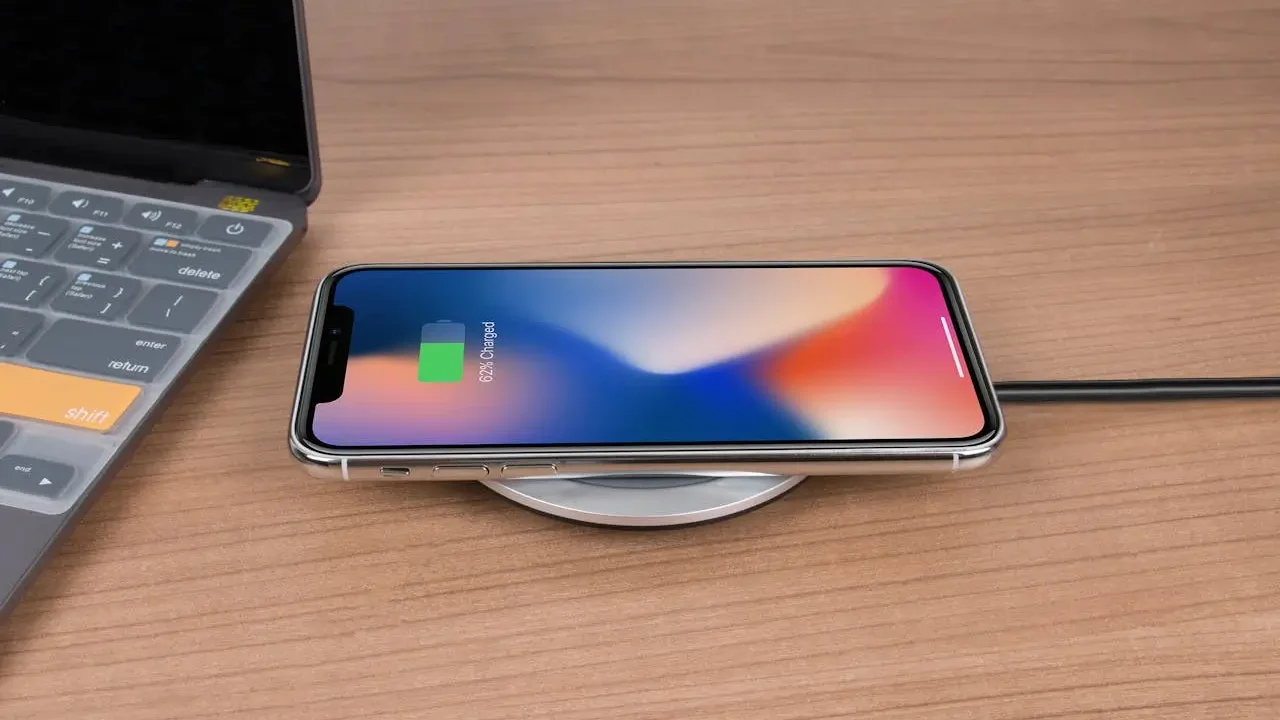
In This Article
Wireless charging has moved from novelty to expectation. A premium smartphone without wireless charging now feels incomplete. Earbuds rely on it. Smartwatches depend on it. Similar convenience-versus-performance debates exist across consumer technology. For example, users comparing wireless and wired peripherals often face the same trade-offs discussed in our guide on Wireless Mouse vs Wired Mouse: Which Delivers Better Productivity and Gaming Performance?
Even automotive manufacturers integrate wireless charging into vehicle consoles because users increasingly expect power delivery without cables cluttering desks, nightstands, or dashboards.
Yet many consumers use wireless charging every day without understanding the engineering that makes it possible.
The reality is surprisingly elegant.
Wireless charging technology transfers energy through carefully controlled magnetic fields. No exposed electrical contacts are required. No physical connection exists between the charger and the device. Instead, energy moves across a small air gap through electromagnetic coupling that has been refined over decades of electrical engineering research.
Understanding Wireless Charging Technology
At its core, wireless charging technology transfers electrical power from a charging surface to a receiving device without a conductive cable.
The process appears simple from the user’s perspective. Place a phone on a charging pad. Power begins flowing.
The underlying physics is anything but simple.
Modern implementations of wireless charging technology rely on standards developed by the Wireless Power Consortium. The Qi standard dominates the consumer electronics market because it allows devices from different manufacturers to communicate and exchange power safely.
Compatibility matters.
Without a common standard, every manufacturer would require proprietary charging equipment, creating fragmentation across the industry and limiting adoption.
The Science Behind Electromagnetic Induction
The foundation of wireless charging technology is electromagnetic induction. Metric Wired Charging Wireless Charging Technology Energy Transfer Method Direct electrical conduction Electromagnetic induction Physical Connection Required Yes No Typical Efficiency 90–98% 70–90% Heat Generation Lower Higher User Convenience Moderate High Connector Wear Present over time Eliminated Alignment Requirement None Required Device Communication Limited Continuous power negotiation Foreign Object Detection Not required Required Standardization USB-C, USB PD Qi Standard
A charging pad contains a copper coil positioned beneath its surface. When alternating current passes through this coil, a fluctuating magnetic field forms around it.
This magnetic field becomes the transport mechanism.
Inside the receiving smartphone sits another coil engineered to capture magnetic energy. When the device enters the magnetic field, the receiver coil experiences electromagnetic induction. Energy transfers from the transmitter coil into the receiver coil without direct contact.
The principle can be visualized through the relationship below:
V=-N\frac{d\Phi_B}{dt}
The changing magnetic flux generates voltage inside the receiving coil. That voltage becomes usable electrical power after conversion and regulation by onboard circuitry.
Physics does the work.
Engineering makes it practical.
Why Coil Alignment Matters
One of the most misunderstood aspects of wireless charging technology involves positioning.
Users often notice that a device charges faster when placed precisely in the center of a charging pad. This behavior results from magnetic coupling efficiency.
The transmitter coil and receiver coil operate most effectively when their magnetic fields overlap correctly. Misalignment weakens the energy transfer pathway, forcing the system to work harder while delivering less power.
Small placement errors matter.
Modern charging systems compensate through intelligent coil design. Some premium charging pads include multiple transmitter coils that expand the effective charging area. Others use alignment magnets to guide devices into optimal positions.
Apple’s MagSafe ecosystem represents a notable example of this engineering approach. Magnetic alignment reduces energy loss while improving charging consistency.
Inside the Charging Pad
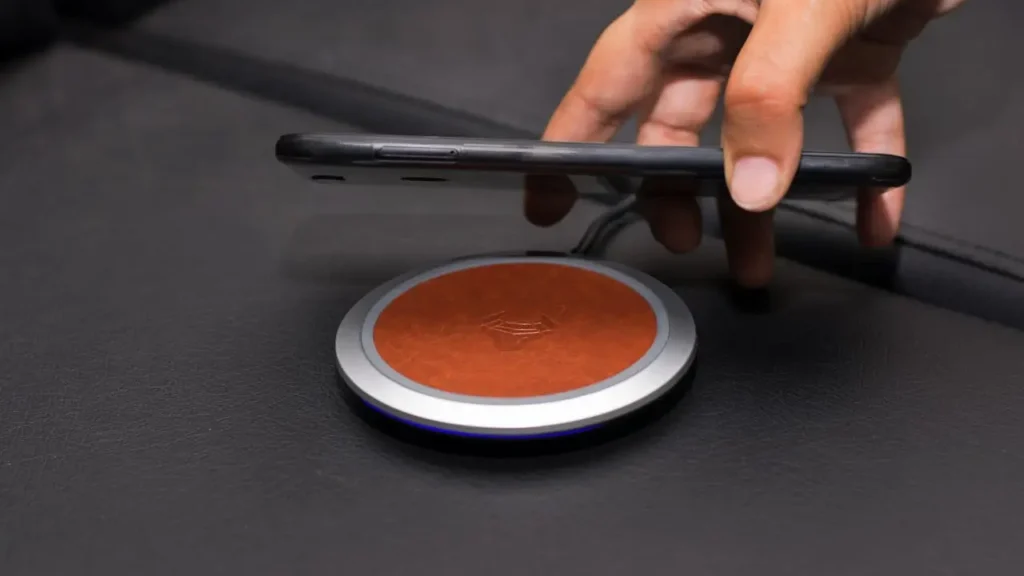
The charging pad serves as the energy transmission platform within wireless charging technology.
Electricity enters the charger through a wired connection from a wall adapter. Internal electronics convert incoming power into high-frequency alternating current. This current energizes the transmitter coil and creates the oscillating magnetic field required for wireless power transfer.
Frequency selection is critical.
If operating frequencies drift beyond specification, efficiency declines rapidly. Excessive heat appears. Performance suffers.
Advanced charging pads continuously adjust power output based on feedback received from the connected device. This communication allows the charger to deliver only the energy required for safe operation.
Power without control creates problems.
Modern wireless charging systems prioritize control.
How Smartphones Convert Magnetic Energy into Battery Power
Receiving energy is only half the challenge.
Once magnetic energy reaches the smartphone, several electronic subsystems process it before battery charging begins.
The receiver coil captures electromagnetic energy and converts it into alternating electrical current. Internal rectification circuits then transform that alternating current into direct current suitable for battery charging.
Voltage regulation follows.
Battery management controllers analyze incoming power levels and adjust charging parameters in real time. These controllers monitor thermal conditions while protecting battery cells from electrical stress.
Protection mechanisms operate continuously.
Users rarely notice them because the entire process occurs automatically.
The sophistication hidden inside modern wireless charging technology explains why today’s devices can safely receive power from a wide range of compatible chargers.
Why Wireless Charging Generates Heat
Heat remains one of the primary engineering challenges associated with wireless charging technology.
Energy transfer through magnetic coupling is inherently less efficient than direct electrical conduction through a cable. Every percentage point of inefficiency becomes heat.
That heat must go somewhere.
When transmitter coils and receiver coils exchange energy, small losses occur within conductors, electronic components, and magnetic fields. The resulting thermal buildup can reduce charging speed if temperatures exceed safe operating thresholds.
Manufacturers address this challenge through thermal management systems.
Temperature sensors monitor charging conditions continuously. Software algorithms dynamically reduce power when heat levels rise. Premium charging accessories incorporate ventilation structures that improve airflow around critical components.
Efficiency improves.
Physics remains uncompromising.
Fast Wireless Charging Explained
Early versions of wireless charging technology were noticeably slower than wired alternatives.
That gap has narrowed considerably.
Modern wireless charging systems routinely deliver power levels exceeding 15 watts. Some proprietary implementations achieve significantly higher outputs under controlled conditions.
Higher power requires tighter engineering tolerances.
The charger and device must exchange information continuously regarding temperature, voltage, and current requirements. Dynamic power negotiation enables rapid charging without exposing battery cells to excessive stress.
Speed alone does not define quality.
Sustained performance matters more than short bursts of peak output. Well-designed systems prioritize thermal stability because excessive heat accelerates battery degradation over time.
Reverse Wireless Charging
One of the more innovative applications of wireless charging technology allows devices to function as chargers themselves.
Reverse wireless charging transforms a smartphone into a portable charging platform. A compatible accessory such as wireless earbuds can draw power directly from the smartphone’s battery through the same electromagnetic induction principles used by traditional charging pads.
The convenience is undeniable.
Users gain emergency charging capability without carrying additional cables or adapters.
The tradeoff is efficiency.
Power losses become more noticeable because energy passes through multiple conversion stages before reaching the receiving device.
Safety Mechanisms in Wireless Charging Systems
Reliable wireless charging technology depends on constant monitoring and verification.
Before significant power transfer begins, the charger and device establish communication. Compatibility checks occur automatically. Power requirements are exchanged. Operational limits are defined.
Only then does charging commence.
Foreign object detection represents one of the most important safety features. Metallic objects accidentally placed between a charger and a smartphone can absorb magnetic energy and generate dangerous heat.
Detection systems prevent this scenario.
When foreign materials are identified, power transmission stops immediately.
Short-circuit protection also remains active throughout operation. Thermal safeguards monitor component temperatures continuously. Voltage regulation circuits maintain stable energy delivery under changing conditions.
Safety is not an optional layer.
It is embedded into every stage of the charging process.
The Real Limitations of Wireless Charging Technology
Despite its convenience, wireless charging technology still faces practical constraints.
Efficiency remains lower than wired charging.
Heat generation remains higher.
Precise positioning remains necessary.
These limitations stem from fundamental physics rather than poor engineering. Energy transferred through magnetic fields encounters unavoidable losses that direct electrical connections largely avoid.
That reality shapes performance expectations.
Users seeking maximum charging speed often choose wired connections. Users prioritizing convenience frequently prefer wireless alternatives.
Both approaches solve different problems.
Why Wireless Charging Continues to Dominate Consumer Electronics
The success of wireless charging technology reflects a broader shift toward frictionless user experiences.
Consumers value simplicity.
Removing cables eliminates connector wear. Charging becomes easier in low-light environments. Shared charging surfaces become practical across multiple devices that support common standards.
The engineering achievement extends beyond convenience.
Modern wireless charging technology combines electromagnetic physics, thermal management, power electronics, battery protection systems, and communication protocols into a seamless experience that appears effortless from the outside.
Users place a device on a surface.
Complex electrical engineering handles everything else.
That is the real achievement of wireless charging.
What is wireless charging technology?
Wireless charging technology transfers electrical energy through magnetic fields instead of physical cables. It uses electromagnetic induction between transmitter and receiver coils.
Does wireless charging damage batteries?
No. Modern battery management systems regulate voltage, current, and temperature to protect battery health during charging.
What is the Qi standard?
Qi is the dominant global wireless charging standard. It enables compatibility between chargers and devices from different manufacturers.
Is wireless charging safe?
Yes. Modern systems include temperature monitoring, foreign object detection, voltage regulation, and communication-based safety controls.