

In This Article
Test cricket still punishes technical fraud.
White-ball acceleration may dominate broadcast packages and social media clips, yet the longest format continues to expose structural weaknesses with brutal efficiency. Loose alignment fails. Reactive footwork collapses under sustained pressure. Mental fatigue leaks into shot selection. Over five days, the game strips batting down to repeatable mechanics and decision quality.
That reality explains why Joe Root remains one of the defining Test batters of his generation.
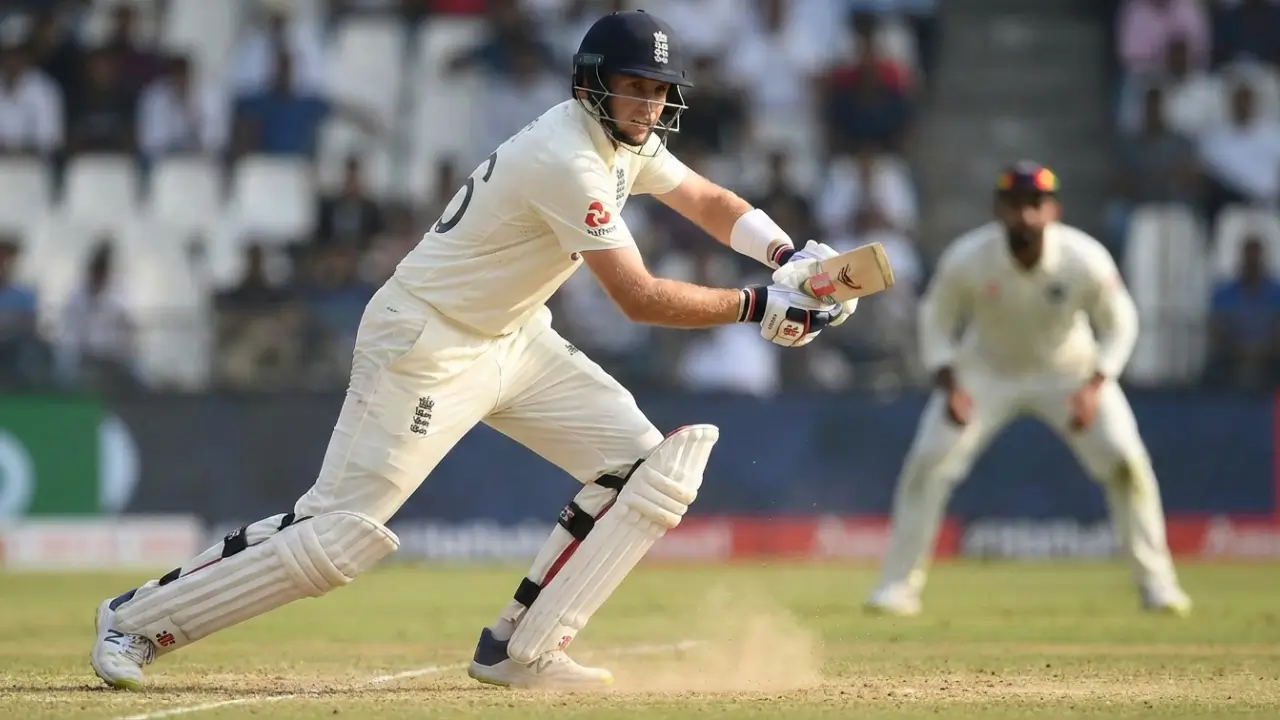
His success does not emerge from intimidation or raw physical dominance. Root’s game operates through precision sequencing. His trigger movement stabilizes balance before release. His bat path stays compact under late swing. His footwork manipulates length rather than merely responding to it. Every movement reduces uncertainty by fractions. Over an innings, those fractions become control.
That distinction matters.
Many elite batters survive difficult conditions through counterattack. Root survives by narrowing technical error margins until bowlers are forced into lower-percentage plans. His method looks calm because the mechanics beneath it are ruthlessly disciplined.
The Technical Base of Root’s Batting Structure
Root’s batting begins with alignment.
That same emphasis on control and decision architecture also defines modern captaincy, particularly in this detailed breakdown of Kane Williamson captaincy analysis and tactical leadership under pressure.
His stance remains slightly open without compromising side-on stability at contact. That subtle adjustment improves visual access against seam movement while preserving enough balance to play late beneath the eyes. The setup appears uncomplicated on television. It is not.
Modern Test bowling attacks weaponize angle creation. Left-arm seamers attack across the channel. Right-arm quicks target fourth stump with wobble seam variation. Spinners alter release trajectories to disrupt initial movement patterns. Batters who overcommit early lose positional control before the ball reaches decision range.
Root avoids that trap.
His initial movement stays economical. No exaggerated trigger. No heavy front-foot press. He creates readiness without sacrificing neutrality. That allows him to move decisively after length recognition instead of pre-guessing.
The difference is enormous.
Batters who commit early often look fluent until conditions deteriorate. Once movement off the seam increases, those same players become trapped between attacking intent and survival instinct. Root’s structure absorbs uncertainty more efficiently because it delays commitment by milliseconds while maintaining balance integrity.
His hands contribute equally to that control.
The backswing stays tight and direct. There is minimal flourish. Minimal excess motion. The bat enters the hitting zone quickly, which becomes critical against late deviation. On difficult surfaces, large backlift patterns increase recovery time and expose edge risk outside off stump.
Root trims unnecessary movement from the sequence.
That engineering mindset defines his entire method.
Footwork as a Length-Control System
Most commentary oversimplifies footwork.
The discussion usually collapses into front foot versus back foot mechanics, which misses the actual purpose of elite movement. Great footwork does not simply reach the ball. It manipulates spatial control inside the batting crease.
Root excels because his movements stay connected to balance instead of aggression.
Front-Foot Mechanics Against Seam Bowling
Against pace, Root moves forward with measured weight transfer rather than lunging toward the ball. The front stride remains controlled, allowing his head position to stay stable through impact.
That stability matters more than aesthetics.
When the head falls outside the line of the ball, the hands compensate independently. Independent hand correction creates edges. Root minimizes that breakdown by ensuring his body and bat arrive together.
His straight drive demonstrates the principle perfectly.
The shot rarely appears violent. Instead, the bat face stays aligned for longer through the hitting zone, allowing timing to generate pace naturally. Many aggressive players hit through the ball. Root extends through it.
Different outcome entirely.
His forward press also neutralizes swing by reducing indecision length. Bowlers want hesitation. Root removes it through early positional clarity once the length becomes readable.
Back-Foot Control Under Pressure
Short-pitched bowling exposes technical panic faster than any other delivery type.
Root handles it through compact withdrawal mechanics rather than exaggerated evasion. His back-foot transfer creates room without destabilizing alignment. That allows him to cut, defend, or ride bounce depending on field placement and match situation.
The key lies in his posture.
He rarely falls backward while defending rising deliveries. The spine stays relatively upright. That preserves visual tracking and keeps the bat path controlled against steep bounce.
Even his defensive strokes contain intention.
Nothing looks improvised.
Lateral Adjustments and Micro-Movement Efficiency
This is where Root separates himself from technically good batters.
His small lateral adjustments before contact consistently reposition him into optimal scoring alignment. These movements often go unnoticed because they occur subtly and late.
Elite Test batting lives there.
Not in spectacular drives.
Tiny positional corrections allow Root to convert uncertain lengths into manageable deliveries. Bowlers searching for deviation struggle because his feet continuously recalibrate to preserve balance at impact.
That constant recalibration reduces static vulnerability.
Static batters become targets.
Spin Bowling and Root’s Positional Intelligence
Spin bowling destroys rigid batters.
| Technical Area | Root’s Method | Tactical Effect | Failure Risk if Misapplied |
|---|---|---|---|
| Initial Stance | Slightly open alignment | Improves visual tracking against seam | Overexposure to inswing |
| Trigger Movement | Minimal pre-delivery press | Preserves reaction time | Static foot positioning |
| Front-Foot Transfer | Controlled stride length | Enhances balance at impact | Head falling outside line |
| Back-Foot Response | Compact withdrawal mechanics | Better short-ball control | Loss of posture |
| Spin Management | Dynamic crease depth | Disrupts spinner length | Overcommitting forward |
| Grip Pressure | Soft-hand absorption | Reduces edge carry | Passive bat face |
| Strike Rotation | Continuous single access | Breaks bowling rhythm | Dot-ball pressure accumulation |
| Innings Construction | Phased scoring expansion | Sustains concentration | Premature attacking intent |
| Mental Routine | Repetitive reset sequence | Maintains cognitive stability | Emotional overreaction |
Once the pitch deteriorates, premeditated movement patterns collapse because the surface itself becomes unpredictable. Root succeeds against spin because his game prioritizes adaptability over fixed responses.
He reads from the hand exceptionally early.
That early recognition influences everything that follows. Length judgment improves. Initial movement sharpens. Shot commitment becomes cleaner. Against high-level spin, delayed recognition creates defensive chaos within fractions of a second.
Root rarely appears rushed.
Using Depth Against Spin
Many batters approach spin with binary thinking. Either fully forward or deeply back.
Root works within the middle spaces.
He manipulates crease depth constantly, forcing spinners to recalculate ideal length. By advancing selectively, he disrupts loop and drift patterns. By retreating late, he converts fuller deliveries into back-foot scoring opportunities.
That tactical elasticity pressures bowlers psychologically.
Length becomes unstable.
Once a spinner loses precise control of attacking length, field settings begin collapsing because containment replaces wicket-taking intent.
Root understands this dynamic deeply.
Soft Hands and Edge Reduction
Hard hands amplify danger against spin.
Edges carry harder. Bat-pad chances increase. Close-in catchers remain active for longer periods. Root counters this through relaxed grip pressure and late bat absorption.
The ball dies faster.
That sounds simple. It is technically demanding.
Maintaining soft hands while rotating strike requires exceptional wrist control and precise timing. Root balances both through disciplined bat-face angles rather than flashy manipulation.
His control against turning deliveries often comes from what he refuses to do.
No unnecessary force.
Strike Rotation as Pressure Redistribution
Modern Test cricket increasingly rewards batters who rotate strike against spin instead of defending endlessly. Root weaponizes this principle with relentless efficiency.
Singles matter.
Not because they inflate scoring rates, but because they disrupt bowling rhythm and field stability. Root continuously accesses awkward angles through late deflections and controlled placements. Spinners lose rhythm when forced to alter fields repeatedly.
That creates boundary opportunities naturally without requiring reckless expansion.
Calculated accumulation remains the foundation.
Long-Innings Construction and Cognitive Endurance
Batting for six hours is not primarily physical.
It is cognitive compression under fatigue.
Root’s long-innings method reflects advanced mental pacing more than emotional intensity. He rarely attempts to dominate sessions theatrically. Instead, he builds innings through incremental control expansion.
The opening phase stays conservative.
He reduces scoring ambition early while calibrating pace, bounce, and movement. This is not passive batting. It is information gathering under live conditions. Once his internal model of the surface stabilizes, scoring options widen naturally.
Poor Test batters chase rhythm immediately.
Root earns it.
Shot Selection as Risk Filtering
His shot selection system remains remarkably disciplined across formats and conditions. Early in innings, he avoids horizontal-bat aggression unless conditions demand it. Straight scoring zones dominate initially because they carry lower dismissal probability.
The logic is brutally practical.
Why attack high-risk areas before decoding surface behavior?
As innings extend, Root expands incrementally rather than suddenly. Bowlers feel pressure building because his scoring map broadens without obvious technical breakdowns.
That gradual expansion exhausts attacks mentally.
Mental Repetition and Routine Stability
Long concentration periods require repeatable routines that reduce cognitive drift. Root relies heavily on between-ball reset patterns. Glance away. Re-center stance. Rebuild focus.
Again and again.
The repetition prevents emotional spikes from destabilizing decision-making. Batters who emotionally react to every near-miss eventually lose technical discipline.
Root minimizes emotional leakage.
That consistency explains why he converts starts into substantial scores more frequently than many naturally aggressive contemporaries.
Where Root’s Method Still Faces Pressure
No batting method is flawless.
High pace combined with steep bounce can still pressure Root’s compact structure, particularly when bowlers attack body alignment aggressively from short-of-good-length areas. On surfaces with variable lift, even minor positional delays become dangerous.
The margins tighten quickly.
His method also depends heavily on rhythm continuity. Extended defensive periods without strike rotation can occasionally trap him into lower scoring phases where bowlers regain territorial control.
Those vulnerabilities remain real.
Yet the important point is this: Root’s weaknesses emerge at the outer edge of elite bowling conditions, not because his technical base lacks coherence.
That distinction matters enormously for younger players studying his game.
Why Root’s Method Reflects Modern Test Cricket Evolution
Root represents a transitional batting model.
Traditional Test batting prioritized survival through defensive occupation. Contemporary cricket demands run generation alongside technical endurance. Root merges both without compromising structural integrity.
That balance defines elite modern batting.
His development also reflects the increasing sophistication of cricket analytics and biomechanics. Video analysis refines bat paths. Movement tracking sharpens foot positioning. Data modeling exposes scoring inefficiencies by zone and phase.
The modern batter operates inside a feedback ecosystem.
Root absorbs those refinements without becoming robotic. His game still feels instinctive because the technical adjustments reinforce natural movement patterns rather than overwrite them.
That integration is difficult.
Most players become either overcoached or technically chaotic. Root avoids both extremes.
Technical Lessons Players Can Actually Apply
Young batters often imitate Root superficially while ignoring the underlying mechanics that make his game functional.
The details matter more.
Footwork drills should prioritize balance recovery instead of exaggerated movement speed. Spin practice should emphasize late decision-making rather than automatic attacking intent. Long net sessions should train concentration maintenance under fatigue instead of chasing aesthetic strokeplay.
Discipline precedes fluency.
Root’s method repeatedly proves that efficient Test batting comes from controlling variables before expanding aggression. Every technical choice inside his game serves positional stability and decision clarity first.
Run-scoring emerges from that foundation.
Not the other way around.
What makes Joe Root’s batting technique effective in Test cricket?
Balance. Root’s batting method succeeds because his footwork, head position, and shot selection remain structurally aligned under pressure.
Does Joe Root rely on aggressive batting to score runs?
No. Root builds innings through controlled accumulation before expanding scoring zones later in the innings.
Why is Root considered strong against spin bowling?
His positional adaptability. Root constantly changes crease depth and uses soft hands to neutralize spin variation.
How does Joe Root handle fast bowling?
Through compact mechanics. He minimizes exaggerated movement and keeps his bat path short against late seam movement.
What is Root’s biggest technical strength?
Late decision-making. He delays commitment longer than many batters, which improves adjustment against swing and spin.
Why does Root rotate strike so effectively?
Because he manipulates angles early. His wrist control and positioning create low-risk single opportunities consistently.
What separates Root from technically average Test batters?
Efficiency. Root removes unnecessary movement and reduces technical error margins across long innings.