

In This Article
Football often appears chaotic from the outside. Twenty-two players continuously adapt to movement, pressure, and changing spaces without interruption. Yet some of the most influential moments in elite competition emerge when the game pauses.
Set pieces in football explained is no longer a beginner’s educational topic; it has become an analytical category that directly influences performance departments, recruitment strategies, and match preparation sessions across professional football.
The modern game is increasingly compressed. Defensive units remain compact, pressing systems have become synchronized, and creating open-play opportunities against organized opponents demands enormous energy expenditure. Under these conditions, structured restarts have evolved into one of football’s most controllable environments.
Margins are extremely small.
Managers dedicate entire training blocks to these situations because dead-ball sequences remove randomness from the equation. Coaches know where the ball starts, which players occupy specific zones, and what movements are expected during the next three to six seconds.
Those seconds often determine outcomes.
What Are Set Pieces in Football?
Set pieces in football explained refers to all structured methods used to restart play after an interruption.
The three primary examples are corner kicks, free kicks, and throw-ins.
Unlike open play, these situations operate under clearly defined rules established by the Laws of the Game. The ball becomes stationary or is placed at a predetermined location while players organize themselves before execution.
This creates an unusual environment.
For a brief moment, football transforms from a fluid transitional sport into a rehearsed tactical exercise.
That distinction is significant because predictability introduces strategic advantages. Elite teams exploit these opportunities through extensive video analysis, opposition scouting, and repetition-based training sessions.
Modern coaching staffs frequently include dedicated set-piece specialists whose responsibilities focus entirely on attacking and defending these scenarios.
That level of investment is deliberate.
Recent trends across European football consistently show that between 25% and 35% of goals can originate from set-piece situations, depending on league context and season variation.
The number fluctuates.
The importance does not.
Why Modern Football Prioritizes Set Pieces
Set pieces in football explained cannot be treated as isolated incidents disconnected from broader tactical identities.
| Set Piece Type | Average Frequency Per Match | Primary Objective | Direct Scoring Probability | Tactical Priority |
|---|---|---|---|---|
| Corner Kicks | 8-12 | Create aerial overloads | Medium | Very High |
| Direct Free Kicks | 2-5 | Immediate shot creation | Medium-High | Very High |
| Indirect Free Kicks | 2-4 | Deliver into dangerous zones | Medium | High |
| Throw-Ins | 40-60 | Maintain possession and territory | Low | High |
Teams build systems around them.
Consider what happens when a low-block defense successfully denies central progression channels for eighty minutes. Open-play opportunities become scarce. Defensive distances shrink. Passing lanes disappear.
Structured restarts suddenly carry disproportionate value.
Football analysts frequently divide possession phases into controlled and uncontrolled environments. Open play belongs to the uncontrolled category because variables constantly shift.
Set pieces reverse that relationship.
Every player receives a defined task.
Attackers know their running patterns. Deliverers understand target zones. Defenders organize reference points. Goalkeepers establish communication responsibilities.
Execution becomes measurable.
Mistakes become obvious.
This predictability is precisely why elite clubs dedicate significant resources to dead-ball analysis.
Corner Kicks Explained: More Than Crosses Into The Box
Understanding Corner Kick Rules
A corner kick occurs when the defending team touches the ball last before it completely crosses its own goal line without entering the goal.
The attacking side receives possession.
The ball is placed within the nearest corner arc, and opponents must remain 9.15 meters away until the restart occurs.
One rule often surprises casual viewers.
A player can score directly from a corner kick.
Although relatively uncommon, this remains completely legal under football regulations.
The Tactical Layers Behind Modern Corners
Set pieces in football explained becomes particularly interesting when analyzing corners because clubs approach them differently based on squad profiles.
There is no universal formula.
Some teams prioritize inswinging deliveries because the trajectory naturally bends toward dangerous central zones. Others prefer outswingers that allow attacking players to attack the ball with forward momentum.
Then there are short corners.
These routines deliberately manipulate defensive structures.
Defending teams typically overload penalty areas with numerical superiority. Short combinations drag defenders away from established positions, creating temporary confusion before secondary deliveries arrive.
Timing is critical.
The first movement often acts as a decoy.
Many successful corner sequences involve attackers beginning outside congested areas before accelerating into targeted spaces rather than remaining stationary.
Static attackers are easier to defend.
Movement changes everything.
Defensive Corner Structures
Most professional teams now combine multiple defensive approaches instead of exclusively using zonal or man-marking systems.
Hybrid systems dominate.
Specific defenders protect high-value zones around the six-yard box while others track dangerous runners.
Communication determines effectiveness.
Even a one-second lapse can collapse the entire structure because attacking teams intentionally create traffic through crossing runs and screen movements.
Corners are orchestrated collisions disguised as positioning exercises.
Free Kicks Explained: Football’s Highest-Value Dead-Ball Opportunity
Understanding Direct And Indirect Free Kicks
Set pieces in football explained reaches another level when discussing free kicks because not every infringement creates identical opportunities.
Football recognizes two categories.
Direct free kicks allow immediate scoring attempts.
Indirect free kicks require another player’s touch before a goal becomes valid.
The distinction changes tactical decisions instantly.
Location also matters.
A direct free kick from twenty-two meters creates an entirely different equation than one awarded forty meters away.
Distance dictates possibilities.
Why Dangerous Free Kicks Create Defensive Stress
Free kicks around penalty areas produce enormous psychological pressure.
Everything slows down.
Attackers gain time to calculate trajectories, while defenders must anticipate outcomes before execution.
Walls become essential defensive mechanisms.
However, modern attacking teams increasingly target spaces around defensive walls rather than attempting straightforward shots.
Goalkeepers understand this trend.
As a result, wall positioning has become increasingly sophisticated.
Some teams instruct one player to lie behind the wall to prevent low-driven attempts underneath jumping defenders. Others deploy runners designed to disrupt goalkeeper vision during delivery.
Tiny details matter.
Professional football often rewards centimeter-level advantages.
Longer Free Kicks Function Differently
Distance transforms objectives.
Free kicks from deeper areas frequently resemble corner-kick scenarios rather than shooting opportunities.
Deliverers target far-post channels.
Attackers delay runs.
Second-ball preparation becomes equally important because initial deliveries rarely produce direct scoring outcomes.
The sequence rarely ends with the first contact.
Football increasingly values what happens immediately afterward.
Throw-Ins Explained: Football’s Most Underrated Possession Weapon
Understanding Throw-In Rules
Set pieces in football explained often overlooks throw-ins because they appear ordinary.
That assumption is inaccurate.
Throw-ins occur whenever the ball completely crosses either touchline.
The opposing team gains possession.
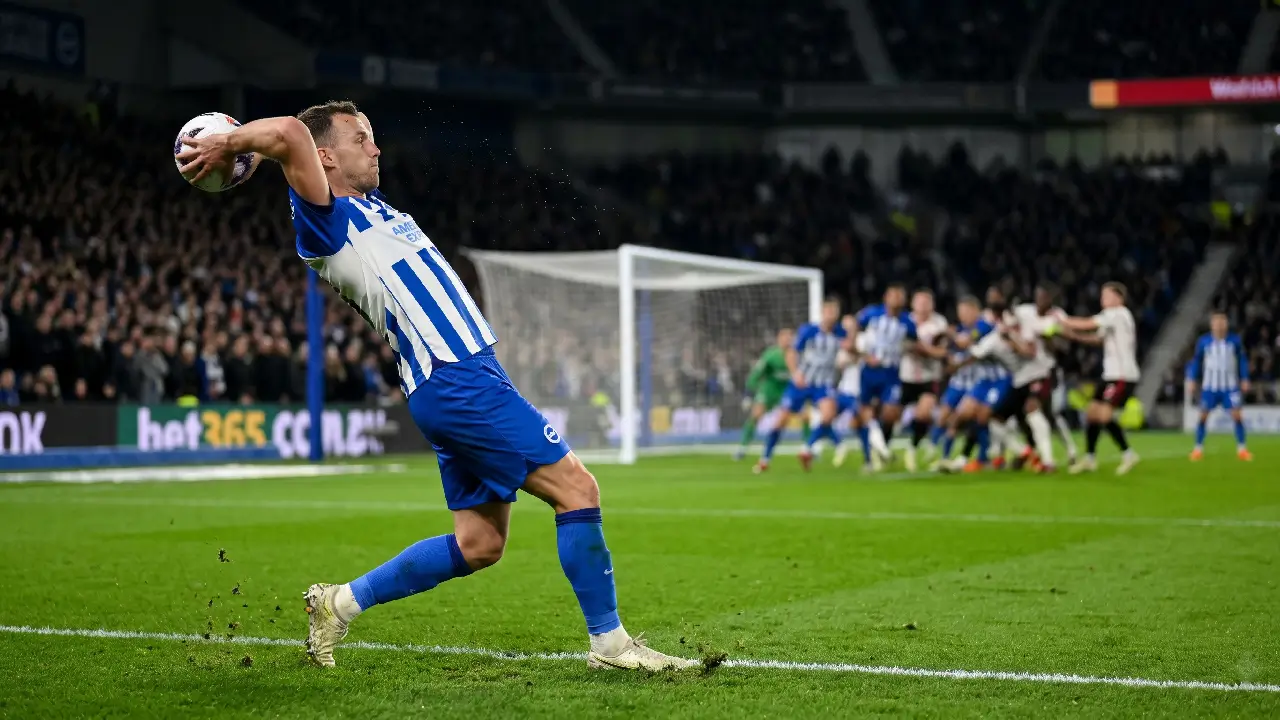
Execution requires strict adherence to technique. The thrower must face the field, keep both feet touching or behind the line, and deliver the ball with both hands from behind and over the head.
Several restrictions exist.
Direct goals are prohibited.
The thrower also cannot touch the ball again until another player intervenes.
Simple rules.
Complex consequences.
Why Professional Teams Study Throw-Ins Intensively
Elite football changed its perception of throw-ins during the past decade.
Analysts discovered something important.
Teams encounter approximately forty to sixty throw-ins per match.
That volume creates opportunity.
Instead of treating these moments as interruptions, clubs began viewing them as possession platforms.
Certain teams construct entire progression systems around throw-ins.
Nearby players rotate positions. Midfielders vacate spaces intentionally. Opponents become trapped against touchlines.
Territory changes rapidly.
Throw-ins now function as mini pressing traps or controlled escape mechanisms depending on match context.
The Rise Of Long Throw Specialists
Some clubs weaponize distance.
Long throw specialists effectively transform throw-ins into corner kicks delivered from wider areas.
The principle remains simple.
Flood dangerous spaces.
Attack second balls.
Force defensive instability.
When executed correctly, long throws create enormous pressure because defenders have less preparation time compared to traditional corners.
The ball arrives faster.
Chaos follows.
How Set Pieces Evolved Into Specialized Departments
Football’s tactical evolution elevated dead-ball scenarios into independent coaching disciplines.
Dedicated analysts now study opponent tendencies extensively.
Questions become highly specific.
Which defender loses concentration near the back post?
Who attacks near-post zones aggressively?
Which goalkeeper struggles with aerial traffic?
Every answer informs preparation.
Software platforms track movement patterns frame by frame. Coaching staffs identify repeatable weaknesses and build routines accordingly.
Modern football rewards information.
Set pieces provide the cleanest environment for applying it.
Common Errors That Destroy Set-Piece Efficiency
The first mistake remains poor ball delivery.
Crosses fail to bypass initial defenders.
Tempo disappears instantly.
Another frequent issue involves predictable movement patterns.
When attackers repeat identical runs, defenders adapt quickly.
Variation is essential.
Defensive concentration also deteriorates under pressure.
Players become attracted to the ball instead of tracking runners.
That error repeatedly produces goals across every competition level.
Football punishes hesitation.
Set pieces expose hesitation immediately.
Why Set Pieces Continue To Shape Match Outcomes
Set pieces in football explained ultimately reveals something larger about the modern sport.
Football is becoming increasingly strategic rather than purely spontaneous.
Elite competition rewards repeatable processes.
Dead-ball situations represent football’s most repeatable moments.
Corners generate controlled chaos.
Free kicks manufacture high-probability scenarios.
Throw-ins sustain territorial dominance.
The teams that organize these phases better consistently increase their chances of winning matches, even when open-play superiority remains evenly balanced.
That is the tactical reality driving modern football.
Why are set pieces so important in modern football?
Because organized defenses reduce open-play opportunities. Dead-ball situations create controlled attacking environments where teams can execute rehearsed movements.
Which set piece produces the most goals?
Corner kicks do. Their frequency and ability to flood penalty areas make them the most productive dead-ball source.
Why do teams hire set-piece coaches?
Specialization improves efficiency. Dedicated analysts study opponent habits and build routines targeting measurable weaknesses.
Can a player score directly from a corner kick?
Yes. Football laws allow goals directly from corner kicks without requiring another touch.
What is hybrid defending during corners?
It combines zonal and man-marking responsibilities. Certain players defend spaces while others track individual runners.
Which mistake causes most set-piece goals?
Losing runner awareness. Defenders often watch the ball instead of tracking movement inside dangerous areas.