


In This Article
Football appears simple from a distance: 22 players, one ball, and two goals. Yet the sport’s complexity emerges through positioning, spacing, movement patterns, defensive structures, and coordinated decision-making. Before understanding how players function within tactical systems, it is equally important to understand the laws that govern the game. Readers can explore our complete guide to Association Football Rules Explained: Laws, Fouls, Restarts, and Match Control to understand how referees manage matches and enforce the Laws of the Game.
Understanding football positions and player roles is one of the fastest ways for beginners to improve their knowledge of the game and for coaches to create more organized, tactically disciplined teams.
The phrase football positions and player roles refers to two connected but distinct concepts. A position identifies the area of the pitch where a player primarily operates. A role defines the responsibilities that player must fulfill within a specific tactical system. Two players can occupy the same position while performing entirely different functions depending on the coach’s strategy.
This distinction sits at the center of modern football.
A left-back in one team may spend most of the match protecting defensive spaces. Another left-back may repeatedly advance into midfield, creating numerical advantages during possession. The position remains identical. The role changes dramatically.
Understanding football positions and player roles creates a framework for analyzing matches, evaluating performances, and developing players more effectively.
Why Football Positions Matter
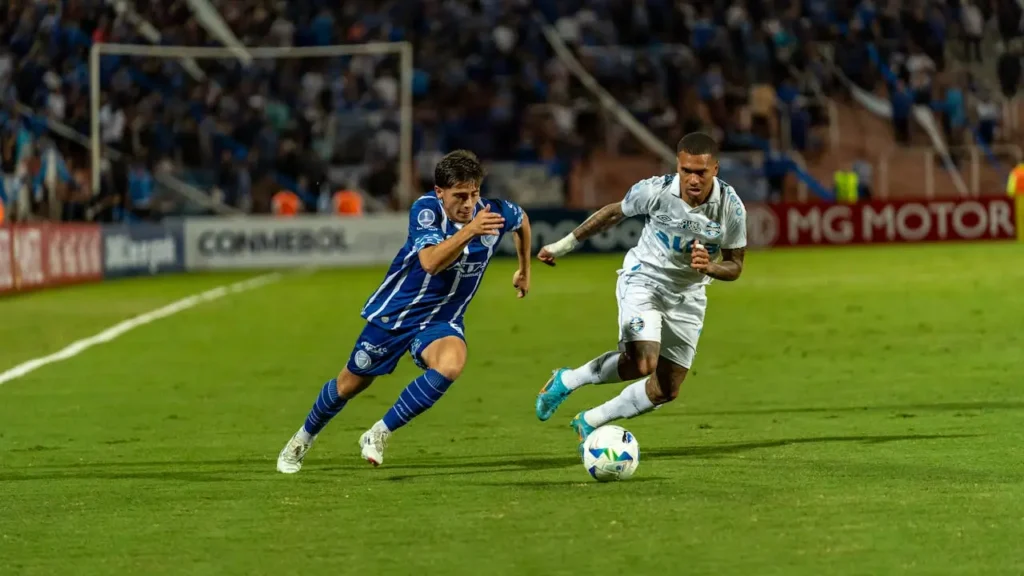
Every football team attempts to solve the same tactical problem: controlling space while maintaining balance between attack and defense. Positions exist because no team can cover the entire pitch effectively without structure.
Distance matters.
When players occupy appropriate areas, passing options remain available, defensive coverage improves, and transitions become more organized. Poor positioning stretches a team vertically and horizontally, creating gaps opponents can exploit.
This is why coaches spend countless training sessions refining positional discipline. Players must understand not only where they should stand but also when they should move and which spaces they must protect.
The relationship between football positions and player roles becomes most visible during transitions. Possession changes quickly. Players react instantly. Teams that understand their responsibilities maintain shape. Teams that do not become vulnerable within seconds.
The Goalkeeper: More Than a Shot Stopper
The goalkeeper remains the only player permitted to handle the ball inside the penalty area, but reducing the position to shot-stopping ignores the demands of the modern game.
Elite goalkeepers function as active participants during possession phases.
When defenders split wide during build-up, the goalkeeper frequently becomes an additional passing option. This numerical advantage helps teams bypass high pressing structures. Accurate distribution has therefore become almost as important as traditional goalkeeping skills.
Positioning is everything.
A goalkeeper who adjusts two steps earlier can eliminate an angle before the shot occurs. Reflexes remain valuable, but anticipation often prevents dangerous situations from developing in the first place.
Communication also carries enormous importance. The goalkeeper maintains the widest view of the field and constantly organizes the defensive line, particularly during crosses, set pieces, and counterattacks.
Center Backs and Defensive Control
Among all football positions and player roles, center backs provide the structural foundation upon which defensive systems are built.
Their responsibilities extend far beyond tackling.
Modern center backs must evaluate distances between teammates, monitor runners, protect central channels, and manage defensive depth. A poorly positioned center back can destabilize an entire defensive unit.
Timing matters.
Winning aerial duels remains a core requirement, especially against direct teams. However, contemporary football increasingly demands composure in possession. Many attacks now begin with center backs receiving under pressure and progressing the ball through precise passing sequences.
Different tactical systems require different profiles.
Some center backs dominate physical battles. Others excel at distribution. Certain systems prioritize recovery speed, while others emphasize positional intelligence and aerial strength.
The role adapts to the team’s broader strategic objectives.
Full Backs: Football’s Most Demanding Position?
Few positions have changed more dramatically over the past two decades.
Historically, full backs focused primarily on defensive duties. Their main objective involved stopping opposing wingers and protecting wide defensive channels. Modern football has expanded those responsibilities significantly.
Today’s full backs frequently become attacking contributors.
They overlap outside wingers, underlap into central spaces, deliver crosses, support pressing structures, and provide width during possession phases. In some systems, they even drift into midfield positions when the team controls the ball.
The physical requirements are substantial.
A full back may sprint 40 meters forward to support an attack and then immediately recover the same distance after possession is lost. This repeated high-intensity movement explains why stamina and acceleration are critical attributes for the position.
Within discussions of football positions and player roles, full backs often represent the clearest example of tactical evolution.
The Midfield: Football’s Decision-Making Hub
Midfield remains the most influential area of the pitch because it connects every phase of play.
| Position | Primary Zone | Main Responsibility | Key Tactical Requirement |
|---|---|---|---|
| Goalkeeper | Penalty Area | Prevent goals and distribute possession | Positioning and communication |
| Center Back | Central Defense | Protect central channels | Defensive organization |
| Full Back | Wide Defense | Defend and support attacks | Recovery speed |
| Defensive Midfielder | In Front of Defense | Screen passing lanes | Spatial awareness |
| Central Midfielder | Central Areas | Connect phases of play | Decision-making |
| Attacking Midfielder | Between Lines | Create scoring opportunities | Creativity under pressure |
| Winger | Wide Attacking Zones | Stretch defensive structure | 1v1 effectiveness |
| Striker | Final Third | Convert chances and lead pressing | Movement and finishing |
Control the midfield, and teams often control the match.
Different midfield roles exist because teams face varying tactical challenges. Some prioritize defensive security. Others emphasize ball progression, creativity, or pressing intensity.
Defensive Midfielders
The defensive midfielder operates in front of the back line and serves as the team’s primary stabilizer.
This role demands constant scanning.
Opponents attempt to exploit central spaces during transitions. Defensive midfielders close passing lanes, intercept forward balls, and delay attacks before they reach dangerous areas.
Many of their best actions never appear in highlight reels.
A subtle adjustment in positioning can block a passing lane entirely. An intelligent movement five meters sideways may prevent a counterattack before it begins.
The influence is often invisible.
The impact is not.
Central Midfielders
Central midfielders function as connectors between defensive and attacking units.
Their workload is relentless.
They support build-up phases, provide passing options, assist defensive recoveries, and contribute to attacking sequences. During ninety minutes, they repeatedly shift between offensive and defensive responsibilities.
Decision-making becomes critical.
The best central midfielders understand when to accelerate play and when to slow it down. They recognize pressing triggers, identify overloads, and manage possession according to match circumstances.
Their role sits at the intersection of technique, tactical awareness, and physical endurance.
Attacking Midfielders
Attacking midfielders operate in spaces opponents desperately try to protect.
Those spaces are small.
Receiving between defensive lines requires awareness, timing, and technical precision. A fraction of a second often determines whether a player can turn and create a chance.
Attacking midfielders influence the game through progressive passing, creative movement, combination play, and goal contributions. They constantly search for pockets of space where defensive structures become vulnerable.
This role remains one of football’s most cognitively demanding positions.
Wingers and Width Creation
Among modern football positions and player roles, wingers often create the most visible moments.
They stretch defensive lines.
When positioned wide, wingers force defenders to cover larger areas. This creates gaps elsewhere on the pitch. Coaches value width not simply for crossing opportunities but because it manipulates defensive spacing.
Traditional wingers remained close to the touchline. Contemporary systems offer greater flexibility.
Some cut inside onto stronger feet. Others attack the byline repeatedly. Certain tactical structures even encourage wingers to move into central scoring positions while full backs provide width outside them.
Their responsibilities have expanded defensively as well.
Many teams require wingers to initiate pressing actions, track opposing full backs, and support defensive transitions.
The role now combines attacking production with substantial defensive work.
The Striker’s Changing Function
Goals remain the striker’s primary responsibility.
That has not changed.
Everything else has.
Modern strikers participate heavily in pressing structures, link-up play, positional rotations, and build-up phases. Coaches increasingly evaluate forwards according to their complete contribution rather than goal totals alone.
Some strikers operate as target players, using physical presence to retain possession and bring teammates into play. Others rely on movement behind defensive lines. Certain forwards specialize in pressing defenders aggressively to disrupt build-up sequences.
Different systems demand different solutions.
A striker’s effectiveness depends heavily on how well their skill set aligns with the team’s tactical model.
Formations: The Structure Behind Roles
When discussing football positions and player roles, formations provide the organizational framework.
Numbers such as 4-3-3, 4-2-3-1, and 3-5-2 describe starting structures. They indicate where players begin, not necessarily where they remain.
Movement reshapes formations constantly.
A team defending in a 4-3-3 may attack in a completely different structure once possession is secured. Full backs advance. Midfielders rotate. Wingers drift inside.
The shape evolves continuously.
This fluidity explains why understanding roles is often more valuable than memorizing formations. The formation establishes reference points. The role determines behavior.
How Football Positions Have Evolved
Football once featured far less specialization.
Early tactical systems prioritized attacking numbers and often left enormous spaces across the pitch. As coaching methods advanced, positional responsibilities became increasingly refined.
Defensive organization improved.
Pressing structures emerged.
Possession-based systems developed.
The result was a significant transformation in football positions and player roles. Modern players must process information faster, cover larger tactical responsibilities, and adapt to multiple game phases.
Versatility has become a competitive advantage.
Many coaches now train players across multiple positions to improve tactical understanding and increase squad flexibility.
Common Misconceptions About Football Positions
One persistent misconception suggests that positions are fixed locations.
They are not.
Effective teams rely on coordinated movement rather than static occupation of space. Players constantly adjust according to possession, pressure, and game state.
Another misunderstanding involves overvaluing attacking contributions.
Defensive actions often prevent goals before danger becomes visible. Interceptions, positional discipline, and intelligent spacing can influence outcomes just as significantly as goals and assists.
Football rewards collective function.
Not individual isolation.
Understanding football positions and player roles reveals how every player contributes to team performance through a combination of movement, decision-making, and tactical discipline.
The game becomes far clearer once those relationships are visible.
What is the difference between football positions and player roles?
Positions identify where a player operates, while roles define what they must accomplish. A left-back may stay deep in one system and move into midfield in another despite occupying the same listed position.
Which football position is the hardest to play?
There is no universally hardest position. Tactical demands differ, but central midfield often requires the widest range of responsibilities, including ball progression, defensive coverage, pressing decisions, and tempo control.
Why are defensive midfielders important?
They protect the most dangerous space on the pitch. Defensive midfielders block central passing lanes, intercept transitions, and reduce exposure for center backs during counterattacks.
What does a modern full back do?
Modern full backs contribute in both phases of play. They defend wide channels, support possession, provide attacking width, and frequently participate in advanced build-up structures.
Can players perform multiple roles in one match?
Yes. Modern tactical systems regularly require positional rotations, with players shifting responsibilities according to possession, pressing triggers, and game state.
Why do coaches teach positional discipline first?
Positional discipline creates stability. Players who understand spacing and responsibilities make better decisions during transitions, pressing situations, and defensive phases.