

In This Article
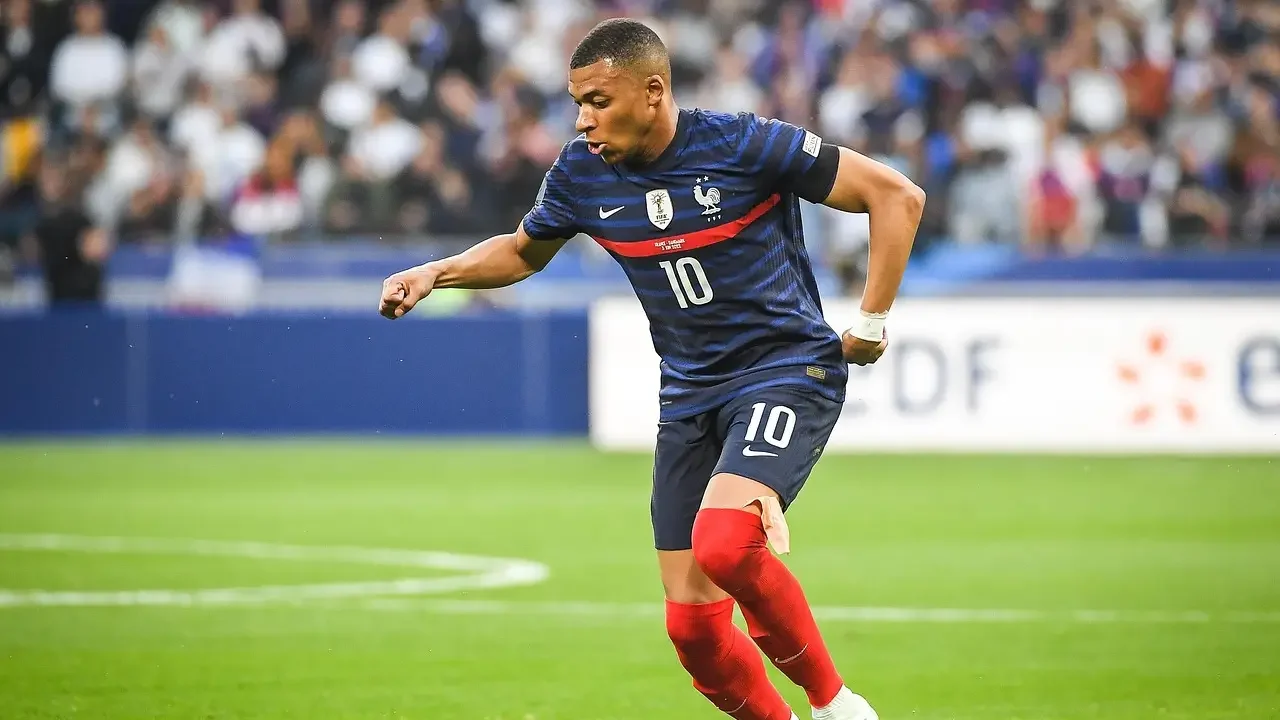
Kylian Mbappé represents the modern prototype of an elite forward: explosive, tactically flexible, commercially powerful, and already decorated with major international honors before turning 30. His career trajectory reflects not only early talent but sustained production at the highest levels of club and international football.
From Bondy to the world stage, Mbappé’s profile is built on speed, efficiency, and decisive moments in the biggest matches.
Early Development and Background
Kylian Mbappé Lottin was born on December 20, 1998, in Paris, France. He developed through the youth systems of AS Bondy, INF Clairefontaine, and later AS Monaco’s academy. That pathway placed him in one of Europe’s most structured talent development environments.
His family environment played a central role in shaping his career decisions. His father was involved in early sporting guidance, while his mother has been deeply influential in managing contractual and professional matters. Mbappé’s career structure has often been noted for being tightly controlled, with decisions kept within a close inner circle.
That early stability allowed him to focus almost exclusively on performance development.
Club Career Progression
AS Monaco
Mbappé’s breakthrough came at AS Monaco, where he rapidly transitioned from youth prospect to senior starter. His pace in transition, combined with intelligent movement inside the penalty area, made him a key figure in Monaco’s domestic success.
His performances in Ligue 1 and European competition quickly attracted attention from Europe’s largest clubs.
Mbappé’s rise places him in the same historical conversation as Lionel Messi and Cristiano Ronaldo, though his career represents a younger generational phase defined by speed-driven transitions and early international success.
Paris Saint-Germain
Mbappé joined Paris Saint-Germain (PSG) in 2017, initially on loan before the move became permanent. At PSG, he evolved into one of the most productive attackers in European football.
During his time there, he:
- Became Ligue 1’s dominant scorer across multiple seasons
- Won numerous domestic titles
- Played a central role in deep Champions League campaigns
In several seasons, he finished as Ligue 1’s top scorer, demonstrating consistency rather than isolated brilliance.
His role at PSG shifted over time from wide attacking threat to more central forward responsibilities, increasing his direct involvement in goal-scoring phases.
Real Madrid Era
Mbappé joined Real Madrid in 2024, marking a major transition in his career.
In Madrid, he immediately assumed a leading attacking role. Recent competitive reports show:
- High goal output in domestic league competition
- Strong performance in European matches
- Rapid milestone achievements in appearance totals
He has already reached significant scoring benchmarks in his first season, reflecting seamless adaptation to La Liga’s tactical demands.
At Real Madrid, his position has primarily been centre-forward, though he remains capable of operating on either wing depending on match structure.
International Career with France
Mbappé made his senior debut for France in 2017.
2018 FIFA World Cup
He became one of the standout players of the tournament, scoring goals in the knockout stages and becoming the second teenager in history, after Pelé, to score in a World Cup final. France won the tournament, and Mbappé was awarded the FIFA World Cup Best Young Player honor.
2022 FIFA World Cup
Mbappé delivered one of the most statistically remarkable World Cup final performances in history, scoring a hat trick in the final. He finished the tournament as Golden Boot winner and received the Silver Ball award.
His ability to perform under maximum pressure has become a defining characteristic of his international profile.
As of 2026, he continues as captain of France and remains central to their attacking structure.
Playing Style and Technical Profile
Mbappé’s game is built around acceleration, positional timing, and efficient finishing.
Key technical attributes include:
Explosive Acceleration
His first three steps generate separation from defenders. This allows him to attack space behind defensive lines before structured coverage forms.
Transition Threat
Mbappé excels in counterattacking systems. When space opens, his sprint timing turns defensive turnovers into scoring opportunities.
Central Penalty-Area Positioning
At Real Madrid, his role increasingly emphasizes central runs rather than isolated wing duels. This increases shot volume in high-probability zones.
Two-Footed Finishing Ability
Although naturally right-footed, he can finish effectively with both feet, reducing defensive predictability.
Off-Ball Movement
His runs are not purely speed-based. He reads defensive lines and adjusts timing to stay onside while maintaining forward momentum.
The combination of speed and tactical awareness makes him effective in both possession-heavy and transition-heavy systems.
Major Individual Awards
Mbappé’s individual recognition includes:
- FIFA World Cup Best Young Player (2018)
- Golden Boy Award (2017)
- Kopa Trophy (2018)
- Multiple Ligue 1 Player of the Year awards
- UEFA Team of the Year selections
- Ballon d’Or top-three finishes
- FIFA FIFPro World11 inclusions
These honors reflect sustained elite performance rather than a single breakout year.
Statistical Consistency
Across club and international competitions, Mbappé has maintained high scoring output each season.
In Ligue 1, he set records for consecutive top scorer finishes and demonstrated rare dual contributions in goals and assists during one season, becoming the first player in that league to lead both categories simultaneously in the same campaign.
His production across domestic league play, Champions League fixtures, and international tournaments shows adaptability across competition levels.
Leadership Role with France
By 2026, Mbappé will function not only as a star forward but also as a national team leader.
As captain, he guides a generation of younger French attackers while maintaining scoring responsibility. His leadership role includes:
- Tactical communication
- Offensive tempo control
- Mentorship within the squad
France’s attacking depth places additional creative support around him, but he remains the focal point in decisive matches.
Market Value and Commercial Influence
Mbappé’s market valuation consistently ranks among the highest in world football.
Beyond the pitch, he is one of the most recognizable global athletes. His endorsement partnerships, particularly with major sportswear brands, contribute significantly to his financial profile.
He has appeared in global influence rankings and has been recognized among the world’s highest-paid athletes in recent years.
His commercial structure is notably family-managed, with legal and advisory teams operating under a controlled internal model rather than traditional agency dominance.
That structure distinguishes his professional governance from many peers.
Injury Management and Professional Scrutiny
Like all elite athletes, Mbappé has faced injury periods, including muscular and joint-related setbacks. Recovery management has occasionally attracted media attention, particularly when timing overlaps with major fixtures.
Recent reports have highlighted both performance expectations and public scrutiny surrounding commitment and workload balance. However, his match statistics and goal contributions continue to demonstrate high-level involvement when fit.
Legacy Outlook
Mbappé’s career trajectory places him in rare historical territory.
By his late twenties, he had:
- Won a World Cup
- Scored in multiple World Cup finals
- Captured major domestic titles
- Transitioned successfully between the top European leagues
- Maintained elite scoring output
Few players combine early international success with sustained club productivity across different football systems.
His profile suggests continued influence in both domestic competition and global tournaments, particularly with France preparing for future international cycles.
Overall Assessment
Kylian Mbappé’s player profile reflects:
- Elite speed and transition effectiveness
- Consistent scoring across competitions
- Major international honors
- Leadership responsibilities at the national level
- High market and commercial value
He represents one of the defining forwards of his generation.
His career is still active, and his statistical record continues to evolve. What remains constant is his capacity to influence matches at the highest level, particularly in decisive knockout scenarios.
Mbappé’s profile is not built on potential alone.
It is built on documented results, major trophies, and sustained elite performance across club and international football.
What team does Kylian Mbappé play for in 2026?
Kylian Mbappé plays for Real Madrid as a central forward. He joined the club in 2024 and became a key attacking leader.
How many World Cups has Mbappé won?
Mbappé won the FIFA World Cup in 2018 with France. He also delivered a historic performance in the 2022 World Cup final.
What position does Mbappé play?
Mbappé primarily plays as a centre-forward but can also operate on the left wing. His tactical flexibility allows him to adapt to different systems.
What makes Mbappé’s playing style unique?
His explosive acceleration, intelligent off-ball movement, and clinical finishing make him highly effective in transition and high-tempo matches.
How many goals has Mbappé scored in his career?
Mbappé has scored over 300 official senior career goals across club and international competitions, with numbers continuing to rise in 2026.
Has Mbappé won individual awards?
Yes. He has won the FIFA World Cup Best Young Player award, the Golden Boy award, multiple Ligue 1 Player of the Year awards, and has ranked highly in Ballon d’Or voting.
Why is Mbappé considered one of the best players in the world?
His combination of early international success, consistent club performance, scoring records, leadership with France, and adaptation across top European leagues places him among the elite of his generation.